







 Custom Aquarium Cost in Dubai
 Saltwater vs Freshwater Aquarium
 Swimming Pool Glass Panels in Dubai
 Koi Pond Maintenance in Dubai
 Adidas Liquid Billboard Dubai
 Green Wall Installation in Dubai
In this article
- Three formats, three different jobs
- Why curved tanks are made in acrylic
- Engineering points that make or break a column tank
- Freshwater or marine?
- Where column aquariums work best
- Planning a cylinder aquarium step by step
- FAQ
- Cylinder Aquarium Sizes: What to Expect
- Choosing Fish and Corals for a Round Tank
- Common Mistakes to Avoid
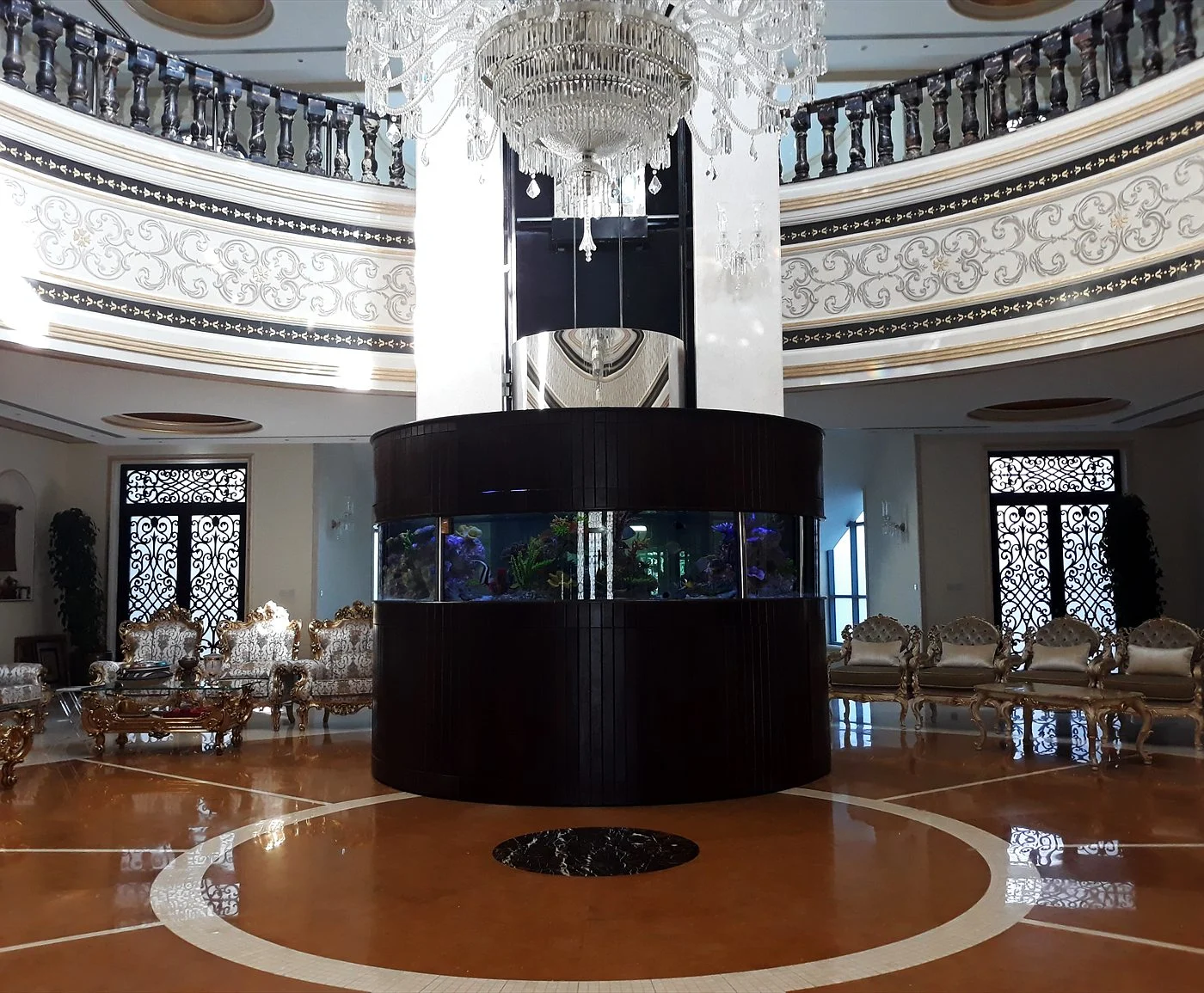
A cylinder or column aquarium turns water into a piece of architecture. Instead of sitting against a wall, the tank stands in the room and can be seen from every side, which is why it works so well in entrance halls, majlis spaces, hotel lobbies and showrooms. This guide explains the main formats, what makes them more demanding than a rectangular tank, and how to plan one for a home or commercial interior in the UAE.
Three formats, three different jobs
Floor-to-ceiling column
A full-height column becomes a structural-looking feature: it can frame a staircase, mark the centre of a double-height hall or stand between two rooms. Because it is tall and slim, the water column is deep in relation to its footprint, so lighting, circulation and access for maintenance have to be designed in from the first sketch.
Cylinder on a plinth
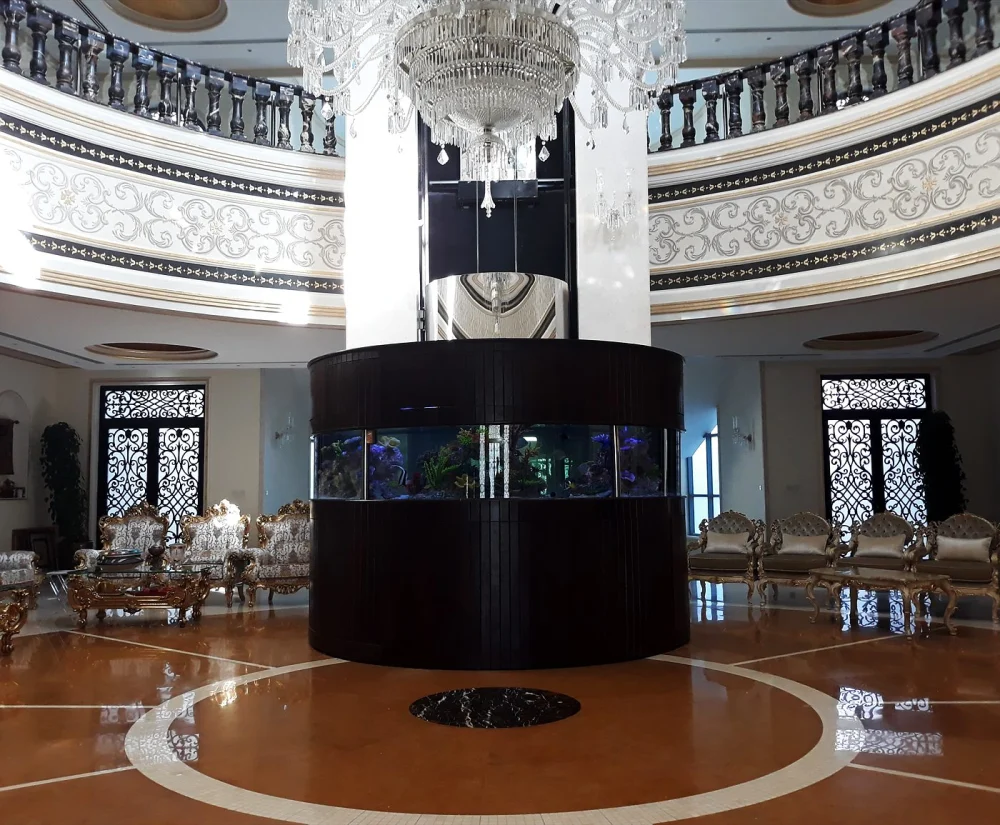
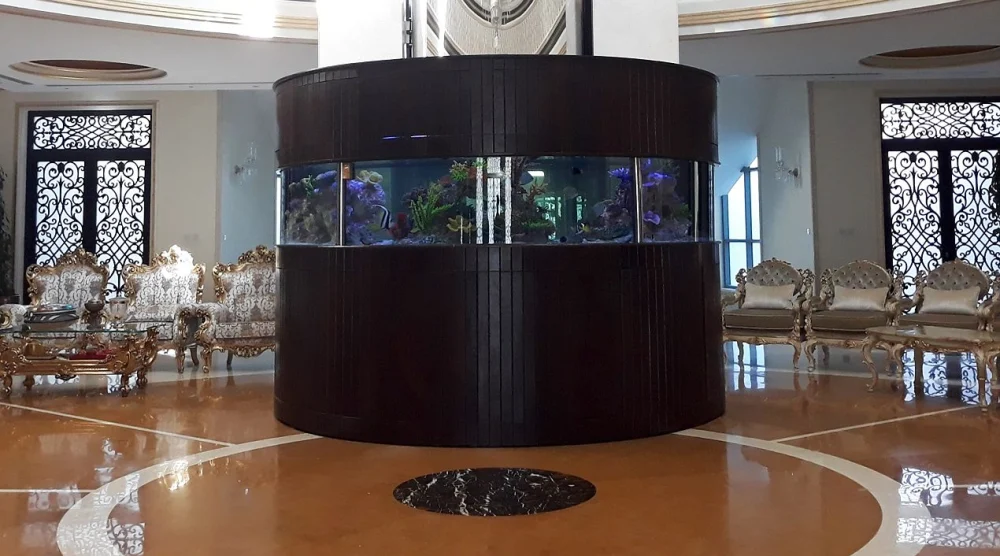
A shorter cylinder on a cabinet or plinth gives the same 360-degree view at a scale that suits living rooms, offices and reception areas. The base usually hides the filtration, and the lid hides the lighting.
Coffee-table and half-cylinder tanks
Coffee-table aquariums are viewed from above as much as from the side, so the aquascape, the glass top and the lighting must look right from a seated position. Half-cylinders, set against a wall or into a niche, give a curved front with a conventional back for equipment.
Why curved tanks are made in acrylic
Most cylinder and column aquariums are built in cast acrylic rather than glass. Acrylic can be formed into a seamless curve, it is lighter than glass of the same strength, and it can be bonded and polished on site. Large curved glass is possible, but it is heavier, harder to replace and limited in the shapes it can take. Our acrylic vs glass guide covers the trade-offs in more detail.
Two practical points come with acrylic. First, it scratches more easily than glass, so cleaning tools and routines matter; see our guide to acrylic scratch repair. Second, a curved wall slightly magnifies what is behind it. Good designers use that effect to make fish and corals look larger, and avoid placing busy equipment where the curve would enlarge it.
Engineering points that make or break a column tank
- Floor loading. Water weighs about one tonne per cubic metre, and a column concentrates that weight on a small footprint. A structural check is essential, especially on upper floors. Our aquarium weight and floor load guide explains what an engineer will look at.
- Remote filtration. A cylinder has no hidden back, so pumps, filters and chillers usually sit in a cabinet, a plant room or the floor below, linked by concealed pipework.
- Circulation. Round tanks can develop dead spots in the centre and stagnant zones at the top of tall columns. Return outlets and overflows are positioned to keep the whole volume moving.
- Lighting from above. In a tall column, light has to travel a long way down. Fixture choice and placement are planned so the bottom of the tank does not look dark; see our aquarium LED lighting guide.
- Access for maintenance. Someone must be able to reach the water surface, clean the inside walls and remove equipment. On floor-to-ceiling columns this usually means a removable ceiling panel or a service hatch above.
- Heat. Lights and pumps add heat, and UAE summers add more. A chiller is often part of the system, especially for reef columns.
Freshwater or marine?
Both work. A planted or rock-scaped freshwater cylinder is simpler to run and suits homes that want a calm, green feature. A marine or reef column delivers colour and movement but needs stable water chemistry, stronger lighting and more regular care. The choice is covered in our saltwater vs freshwater guide.
Where column aquariums work best
| Space | Suitable format | Design note |
|---|---|---|
| Double-height villa hall | Floor-to-ceiling column | Plan service access from the floor above |
| Majlis or living room | Cylinder on plinth | Keep the plinth low so seated guests see the tank |
| Hotel or office lobby | Column or twin columns | Allow for a maintenance contract from day one |
| Lounge or penthouse | Coffee-table aquarium | Design the aquascape to be seen from above |
Planning a cylinder aquarium step by step
- Choose the position with the structure, sight lines and access in mind.
- Decide the scale: height, diameter and how the tank meets the floor and ceiling.
- Choose freshwater or marine, then the livestock, because both shape the equipment.
- Agree where the filtration and chiller will live and how pipework will be hidden.
- Approve shop drawings before fabrication in our workshop.
- Install, commission and hand over with a care plan.
The full sequence is explained in our custom aquarium installation process.
FAQ
How much does a cylinder aquarium cost in Dubai?
Our freshwater aquariums start from AED 15,000 and saltwater from AED 20,000. Cylinders and columns are custom-made, so the final price depends on size, height, acrylic thickness, filtration and installation access.
Can a column aquarium go on an upper floor?
Often yes, but only after the floor has been checked. A column puts a lot of weight on a small area, so a structural review comes before design is finalised.
Is a cylinder aquarium hard to clean?
Not if access is planned. The inside is cleaned with acrylic-safe tools, and tall columns need a hatch or removable panel above so the surface can be reached.
Can fish live happily in a round tank?
Yes, when the tank is large enough, well circulated and stocked with suitable species. Good flow design avoids dead spots, and the aquascape gives fish shelter.
For the service overview, see custom aquarium design and installation, or request a quotation for your space.
Further reading: Acrylic (PMMA) on Wikipedia
Cylinder Aquarium Sizes: What to Expect
There is no single standard size for a custom cylinder, but most projects fall into a few practical bands. The right one depends on ceiling height, floor strength and how close people will stand to the tank.
- Compact (roughly 60–90 cm diameter, 1–1.5 m tall): suits offices, reception desks and living rooms where a plinth or cabinet carries the filtration.
- Medium (roughly 100–150 cm diameter, 1.5–2.5 m tall): a strong focal point for majlis spaces, restaurants and showrooms.
- Tall columns (floor to ceiling): sized to the room, usually with a narrower diameter so the weight stays manageable.
As a rule of thumb, a wider diameter gives better viewing and easier aquascaping, while a very slim, tall column shows fewer fish clearly and is harder to light and clean. Treat these ranges as a starting point only; final dimensions are set by the structural check and the acrylic thickness required.
Choosing Fish and Corals for a Round Tank
A cylinder has no corners to hide in, so livestock is seen from all sides. Species choice matters more than in a rectangular tank.
- Favour calm, mid-sized swimmers that do well in groups, such as schooling tetras or rasboras in freshwater, or peaceful reef fish in marine systems.
- Avoid fast, large open-water swimmers. Constant turning at the curved wall is stressful for them, and the tank looks cramped.
- Use height to your advantage. Mix species that occupy the upper, middle and lower water, so the whole column feels alive.
- Plan the aquascape as a centrepiece. Rockwork or driftwood placed slightly off-centre gives shelter and avoids a flat, symmetrical look from any angle.
Stock gradually and match species to the water chemistry you can maintain consistently. A specialist should confirm compatibility before purchase.
Common Mistakes to Avoid
- Designing the tank before the service route. If there is no way to reach the top or remove equipment, routine care becomes difficult and costly.
- Hiding the sump too far away. Long pipe runs reduce flow efficiency and make leaks harder to trace.
- Ignoring reflections. Windows and bright fixtures reflect strongly on curved acrylic, so check the room lighting at different times of day.
- Overstocking for the volume. A tall tank can look empty, but adding too many fish quickly strains the filtration.
- Skipping a maintenance plan. Even a well-built column needs regular water testing, glass-safe cleaning and equipment checks.