
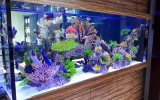

 Custom Aquarium Cost in Dubai
 Saltwater vs Freshwater Aquarium
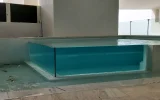
 Swimming Pool Glass Panels in Dubai
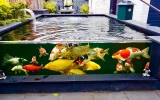
 Koi Pond Maintenance in Dubai
 Adidas Liquid Billboard Dubai
 Green Wall Installation in Dubai
For a large or custom-shaped aquarium, acrylic is usually the better material. For a smaller, flat tank where scratch resistance matters most, low-iron glass is excellent. The detail below is what lies behind that short answer, so you can judge your own project.
Clarity
Both can look crystal clear. At scale, acrylic has the edge: it transmits light well and has no green tint even when thick. Standard thick glass shows a green edge, which low-iron glass largely removes, and that is why low-iron is the glass worth specifying for flat panels. For curved or wrap-around views, acrylic wins because it can be formed into the shape without the distortion that bending glass causes.
Weight and strength
Acrylic is roughly half the weight of glass and far more impact-resistant: it flexes rather than shatters. A big acrylic tank therefore loads the floor less and is easier to move and install. Glass is rigid and holds its shape, but the thickness a large tank demands makes it very heavy, with stronger supports and more demanding handling. That matters in villas with upper floors and in any building with weight limits, which we cover in the aquarium floor load guide.
Scratches
This is glass’s real advantage. It is very hard to mark during normal cleaning. Acrylic scratches more readily, but fine scratches can be polished out, something glass cannot offer. With soft cloths, the right pads and no ammonia-based or abrasive cleaners, acrylic stays clear for years, and routine care is part of our maintenance visits.
Shape
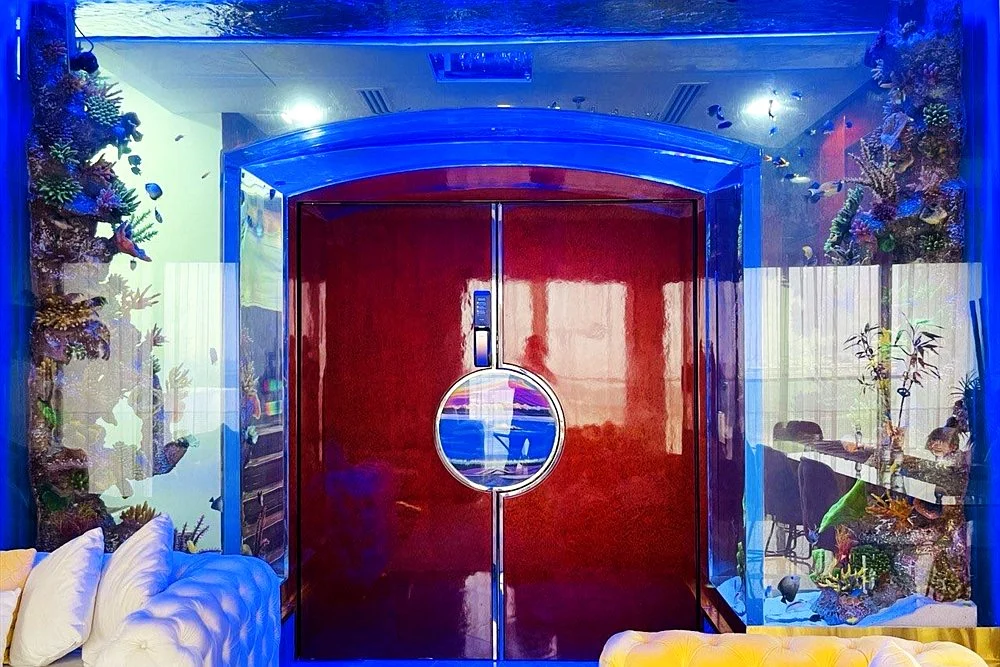
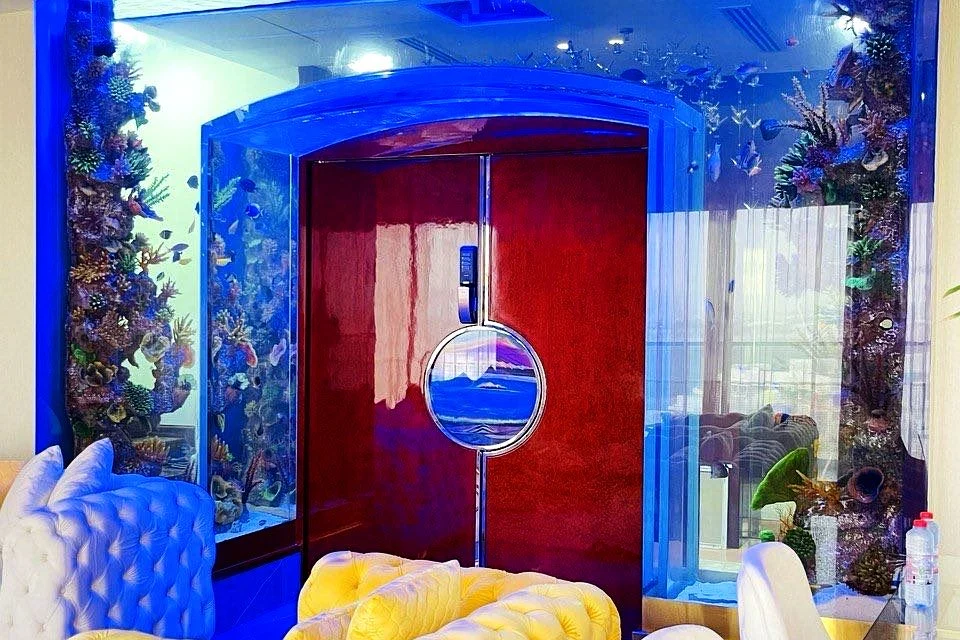
If your design is anything other than a rectangle, acrylic is the practical choice. It can be formed into cylinders, curved walls and bubble windows, and bonded into large panels with almost invisible joints. Room dividers, lobby cylinders and wrap-around corners are nearly always acrylic. Glass is mostly flat; curved glass exists but costs far more.
Cost
For small, flat tanks glass is normally cheaper. For large or custom-shape tanks acrylic is often better value once weight, supports and installation are included. We do not quote from the material alone. Freshwater aquariums from Water Wonders start from AED 15,000 and saltwater from AED 20,000, and the final price follows size, material and specification. See the custom aquarium cost guide.
| Factor | Acrylic | Low-iron glass |
|---|---|---|
| Clarity in large panels | Excellent, no tint | Excellent when low-iron |
| Weight | About half that of glass | Heavy |
| Impact | Very resistant | Can shatter |
| Scratches | More easily marked, polishable | Very resistant |
| Shapes | Curves, cylinders, large bonded panels | Mostly flat |
| Best for | Large and custom builds | Small, flat tanks |
Choosing by location
- Villas. Built-in walls and room dividers suit acrylic. A compact flat display tank can be glass.
- Hotels, restaurants and offices. Feature tanks, cylinders and curved walls are almost always acrylic.
- Anywhere in the UAE. Durability comes from the engineering around the material: correct thickness, supports, filtration and cooling.
The same decision applies to pools with a clear viewing wall, where the water pressure is the dominant load. We discuss it in pool acrylic panel vs glass.
FAQ
Does acrylic turn yellow?
Quality cast acrylic made for aquariums is UV-stable and holds its clarity for years, especially indoors. Low-grade sheet is the one that discolours.
Can scratches in acrylic be removed?
Fine scratches can usually be polished out. Deep gouges need professional work, see acrylic scratch removal.
Is glass twice as heavy?
Roughly, yes, for the same panel. The difference is greatest on large tanks.
Unsure which suits your space? Look at our custom aquarium service or ask our engineers for a recommendation.
Further reading: Acrylic glass, PMMA (Wikipedia)