







 Custom Aquarium Cost in Dubai
 Saltwater vs Freshwater Aquarium
 Swimming Pool Glass Panels in Dubai
 Koi Pond Maintenance in Dubai
 Adidas Liquid Billboard Dubai
 Green Wall Installation in Dubai
In this article
Most tropical aquariums are healthiest at a steady 24 to 26 degrees C. A Dubai summer does not provide that unaided, so for most tanks a chiller is part of the system rather than an upgrade. What follows is how we think about cooling when we design a tank.
Why temperature swings matter more than the number
Fish cope with a stable temperature that is slightly off far better than with one that moves several degrees in a day. Heat also holds less dissolved oxygen, so a warm tank is a low-oxygen tank. The aim is a narrow, steady range, and that is a control problem, not just a cooling one.
Where the heat comes from
- The room. Many Dubai homes and offices are cooled, but not at every hour or in every room.
- The equipment. Lights, pumps and the sump all add heat, particularly inside a closed cabinet.
- The glass. A tank facing a window, or lit by spotlights, gains heat quickly.
How a chiller is sized
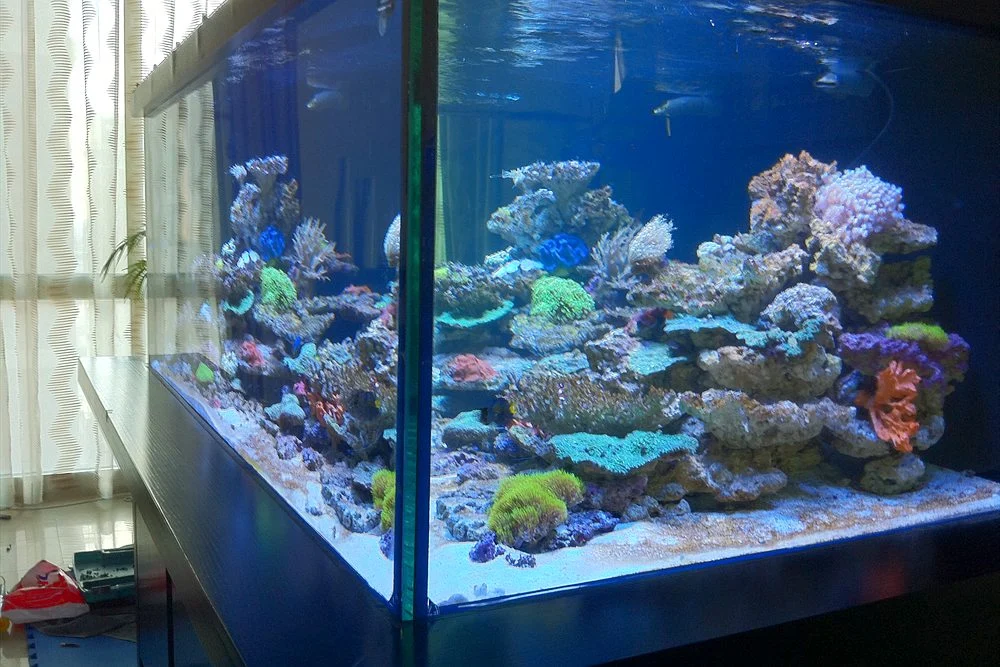
Litres alone are a poor guide. The calculation considers the water volume, how far the temperature must come down, the heat load from lighting and pumps, and the worst ambient conditions of the room. An undersized unit runs flat out and still loses; an oversized one costs more to buy and run. We size it per system and specify it at the design stage, which is why it sits in our process described in how a custom aquarium is installed.
Where to put it
A chiller needs air to reject heat, and it makes some noise. The best position is a ventilated utility space or an open cabinet bay. The worst is a sealed cupboard, where it heats its own surroundings and works harder. For a wall aquarium the plant room is usually behind the wall, so the pipe route and service access are planned before the tank is built.
Power cuts
If power fails, circulation stops and oxygen drops, so planning for an outage protects the fish. Options include a battery-backed air pump, backup power for essential equipment, and an alarm that alerts you to a temperature rise. The right mix depends on the tank and how quickly you can respond.
Running costs
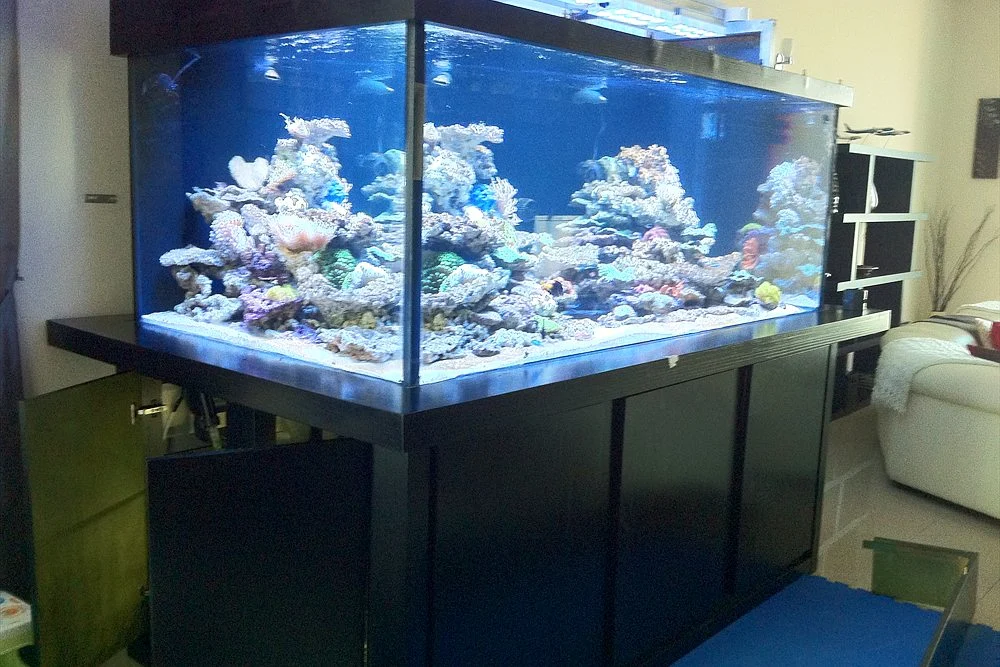
Cooling is usually the largest summer electricity item for an aquarium. A correctly sized unit, good ventilation around it and a tank that is not heated by the room all reduce it. Fitting an insulated cabinet and moving heat-producing equipment out of the cabinet make a noticeable difference.
Questions
Can I fit a chiller to a tank I already own?
Often yes. We need the water volume, the sump and plumbing layout and a photo of the position. Our maintenance team can also check that cooling is working before summer.
Do freshwater tanks need a chiller?
Tropical freshwater fish are happy at around the same range. If the room regularly pushes the tank past that, a chiller is justified.
Do ponds need cooling too?
The same thinking applies to koi ponds. See summer care for koi ponds.
If your tank struggles in summer, tell us about the setup and we will recommend a fix.
Further reading: Chiller (Wikipedia)