






 Custom Aquarium Cost in Dubai
 Saltwater vs Freshwater Aquarium
 Swimming Pool Glass Panels in Dubai
 Koi Pond Maintenance in Dubai
 Adidas Liquid Billboard Dubai
 Green Wall Installation in Dubai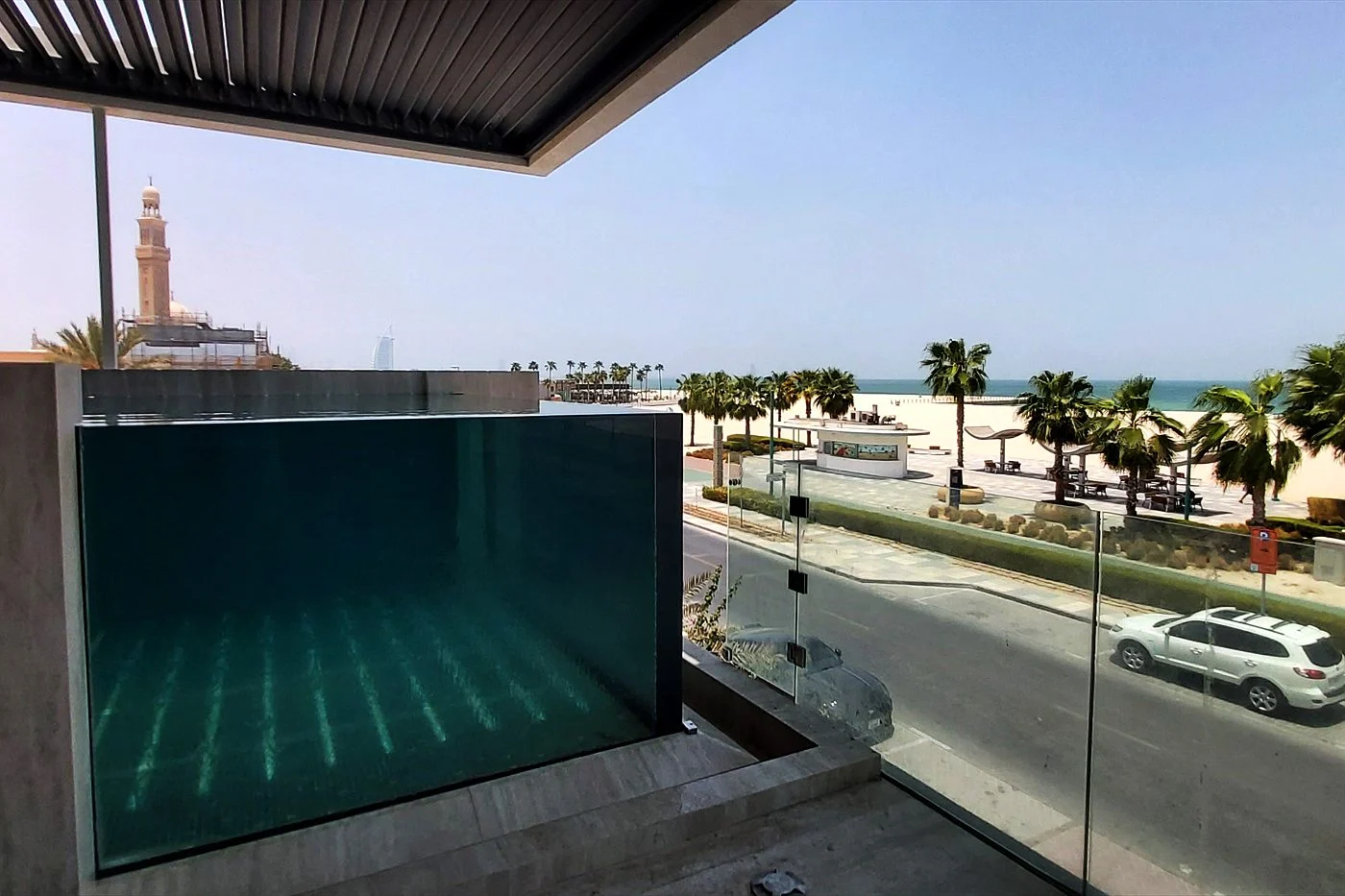
In this article
- What Is a Swimming Pool Glass Panel?
- How Does a Glass Pool Panel Work?
- Types of Swimming Pool Glass Panels
- Laminated vs Tempered Glass
- How Glass Pool Panels Are Engineered for Safety
- Structural Support Systems
- Waterproofing and Installation Process
- Step-by-Step: Design, Manufacture, Testing, and Installation
- Engineering Considerations in Depth
- Common Applications
- Advantages of Glass Pool Panels
- Potential Challenges and Considerations
- Glass Thickness Explained
- Design Options and Customization
- Maintenance Requirements
- Lifespan and Durability
- Safety Standards in Dubai
- Is a Glass Pool Panel Worth It?
- Choosing the Right Pool Glass Contractor in Dubai
- Frequently Asked Questions
- Ready to Bring a Glass Pool Panel to Your Project?
In a city defined by architectural ambition, the swimming pool glass panel has quietly become one of the most transformative features in luxury residential and hospitality design across Dubai. What was once considered an exotic engineering feat reserved for five-star resorts is now a signature element in private villas, rooftop retreats, and boutique hotels throughout the Emirate. A glass pool wall does more than hold water back — it turns a swimming pool into a piece of living architecture, blurring the line between structure and sculpture.
For homeowners, architects, and developers exploring the idea of a glass swimming pool, the questions are usually the same: How does the glass actually hold thousands of litres of water without failing? What makes it safe for Dubai’s climate and structural conditions? And how does a project go from concept sketch to a fully engineered, frameless pool glass installation? This guide answers all of that in detail, walking through the engineering, materials, design options, and practical considerations behind every swimming pool glass panel project.
At Water Wonders, we’ve spent years designing, engineering, and installing custom swimming pools and water features across Dubai and the wider UAE, and glass pool panels are among the most requested — and most misunderstood — features we work with. This article draws on that hands-on experience to give you a genuinely useful, technically grounded look at how these panels work.
If you are comparing materials, our acrylic panel vs glass guide covers the other option. If you are ready to scope a project, see our swimming pool clear panel service, which starts from AED 10,000.
What Is a Swimming Pool Glass Panel?
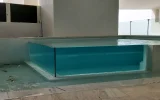
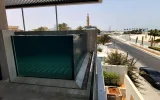
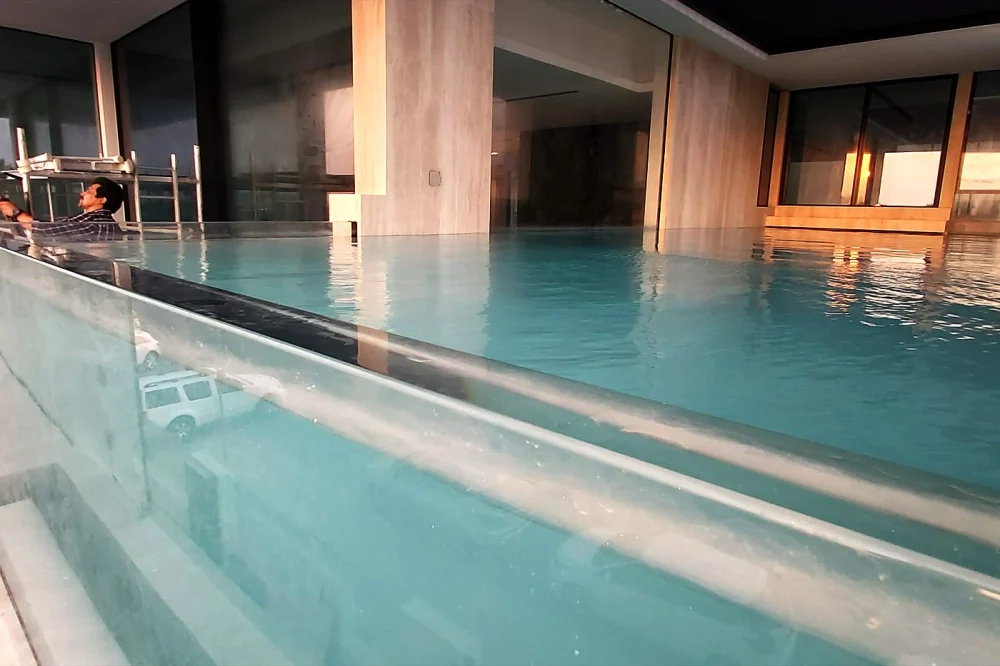
A swimming pool glass panel, sometimes called a glass pool wall or transparent swimming pool wall, is a structural glass element that replaces a section of a pool’s traditional concrete or masonry wall. Instead of an opaque barrier, the panel allows an unobstructed view either into the pool from an adjacent room, or out from the pool toward a view, a garden, or a lower level of a building.
Unlike a simple viewing window bolted onto an existing wall, a properly engineered pool glass panel is a load-bearing component. It must resist the full hydrostatic pressure of the water column pressing against it, 24 hours a day, in all weather conditions — which in Dubai includes extreme heat, intense UV exposure, and occasional heavy rain during winter months.
One of the most advanced examples of large acrylic pool engineering was the Adidas Liquid Billboard Dubai project, where Water Wonders created the world’s first swimmable billboard using a custom acrylic structure.
How Does a Glass Pool Panel Work?
At its core, a glass pool panel works on a simple principle borrowed from naval and aquarium engineering: distribute the water pressure evenly across a rigid, high-strength transparent material, and secure that material within a structural frame — or, in frameless designs, bond it directly into a reinforced channel — so that the forces are transferred safely into the surrounding structure.
Water pressure increases with depth, which means the bottom of a glass panel experiences significantly more force than the top. Engineers calculate this pressure gradient precisely, then select a glass configuration — thickness, number of laminated layers, and interlayer type — that can safely carry that load with a substantial margin of safety, typically several times the expected maximum force.
The Role of Lamination
Almost all structural pool glass is laminated, meaning multiple layers of tempered or heat-strengthened glass are bonded together with a tough polymer interlayer, usually PVB (polyvinyl butyral) or SGP (SentryGlas). This lamination is what allows the panel to remain intact and continue holding water even if one layer cracks — a critical safety feature that distinguishes true structural pool glass from ordinary architectural glazing.
Types of Swimming Pool Glass Panels
Not all glass pool walls are built the same way. The right type depends on the pool’s depth, location, and design intent.
- Frameless glass pool panels — the glass itself is the structural element, typically set into a recessed channel with structural silicone and mechanical fixings. Preferred for a clean, minimalist aesthetic.
- Framed glass pool panels — the glass sits within a metal or composite frame that carries a portion of the structural load, allowing for larger spans or lower glass thickness in some cases.
- Curved or geometric panels — custom-fabricated for infinity pools, rooftop features, or architecturally distinctive designs.
- Underwater viewing panels — smaller windows set into an otherwise solid wall, common in basements, home theatres, or feature walls beneath a pool deck.
Laminated vs Tempered Glass
This is one of the most common points of confusion for homeowners researching pool glass installation, so it’s worth explaining clearly.
Tempered glass is heat-treated to increase its strength, typically four to five times stronger than standard annealed glass of the same thickness. When it does break, it shatters into small, relatively blunt fragments rather than sharp shards — a key safety feature.
Laminated pool glass takes this further by bonding two or more tempered (or heat-strengthened) panes together with a polymer interlayer. This is the standard for any structural, load-bearing pool wall, because it ensures the panel holds together and continues to contain water even if a layer is damaged. In practice, a genuine swimming pool glass panel is never simply “tempered glass” on its own — it is laminated tempered glass, engineered specifically for hydrostatic loading.
Comparison: Glass Panel vs Acrylic Panel
| Feature | Glass Pool Panel | Acrylic Pool Panel |
|---|---|---|
| Clarity | Very clear; standard thick glass shows a green edge unless low-iron glass is specified | Optical-grade acrylic stays very clear even when thick |
| Scratch Resistance | High: resists surface scratching | Lower, but fine scratches can be polished out |
| Large or curved sections | Heavy laminated sections; curves need specialist fabrication | Can be bonded into large continuous panels and formed into curves |
| UV Resistance | Excellent; interlayers and sealants must be UV-stable | UV-stabilised cast acrylic is specified for sunlit pools |
| Weight | Heavier, needs robust structural support | Much lighter, easier to handle on site |
| Typical Use Case | Villas, hotels, architectural feature walls | Pool windows, long or curved walls, large aquariums |
| Cost | Depends on size, thickness, support system and installation for either material, so it is priced per project | |
How Glass Pool Panels Are Engineered for Safety
Every legitimate structural pool glass project in Dubai goes through a rigorous engineering process before a single pane is cut. This isn’t a cosmetic decision — it’s structural engineering with life-safety implications.
Structural Calculations
Engineers calculate the maximum hydrostatic pressure the panel will face, factoring in pool depth, panel dimensions, and support conditions. From this, they determine required glass thickness, lamination configuration, and edge support detailing, typically applying safety factors well beyond the calculated maximum load.
Testing and Certification
Reputable manufacturers test glass assemblies for impact resistance, load deflection, and long-term water immersion performance. Where possible, panels should be specified in accordance with recognised international structural glass standards, alongside compliance with UAE building regulations.
Structural Support Systems
A pool glass panel is only as strong as what holds it in place. Support typically comes from one or a combination of the following:
- Recessed structural channels cast into the surrounding concrete, lined with structural silicone and setting blocks.
- Stainless steel fixing systems for frameless designs requiring point support at specific locations.
- Perimeter framing in framed designs, distributing load across a metal or composite border.
- Expansion joints that allow for thermal movement between the glass, frame, and surrounding structure, particularly important given Dubai’s temperature swings between summer and winter.
Waterproofing and Installation Process
Waterproofing a glass pool wall junction is arguably as critical as the structural glass itself — a beautifully engineered panel is worthless if water finds its way around the edges. Installation typically involves multi-layer waterproof membranes at the glass-to-structure junction, structural silicone sealant rated for continuous water immersion, and redundant sealing details so that no single point of failure can cause a leak.
Step-by-Step: Design, Manufacture, Testing, and Installation
- Concept and site assessment — reviewing the pool design, depth, viewing angle, and structural context of the building or villa.
- Structural engineering and load calculations — determining glass thickness, lamination, and support system based on hydrostatic pressure and safety codes.
- Shop drawings and approvals — detailed fabrication drawings submitted for client and, where required, authority approval.
- Glass fabrication — cutting, tempering, edge polishing, and laminating the panel in a certified facility.
- Quality testing — inspecting for optical clarity, edge finish, and structural integrity before the panel leaves the factory.
- Site preparation — forming the structural channel or frame, installing waterproofing membranes.
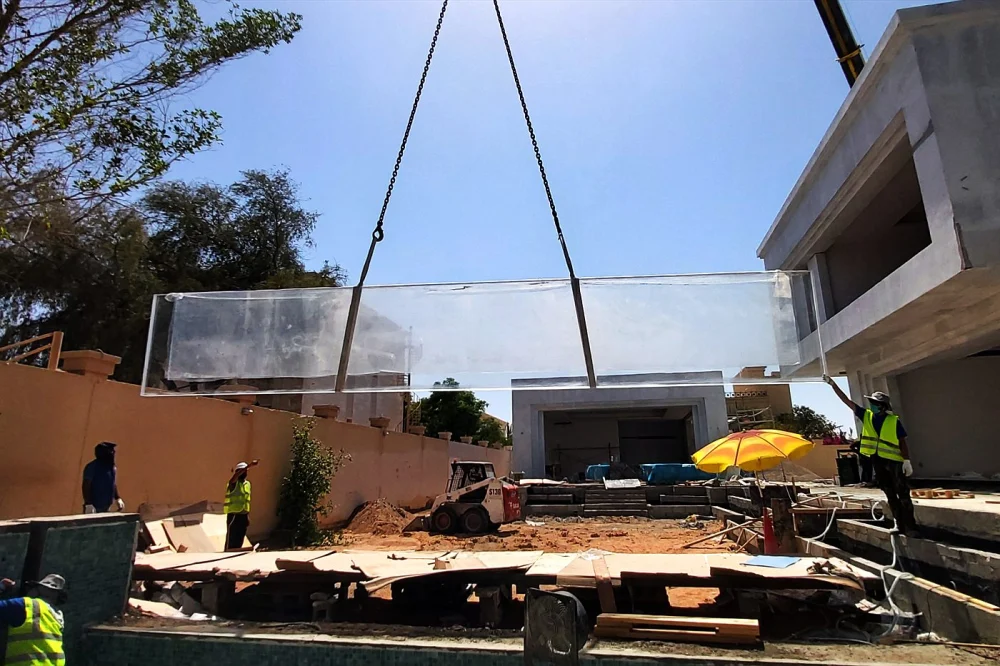
- Panel installation — carefully setting the glass into position using specialised lifting equipment, given the significant weight of laminated structural glass.
- Sealing and structural bonding — applying structural silicone and waterproof sealants at all edges and junctions.
- Curing and pressure testing — allowing sealants to cure fully, then filling the pool gradually while monitoring for any movement or seepage.
- Final inspection and handover — confirming clarity, structural performance, and finish quality before client handover.
Engineering Considerations in Depth
Hydrostatic Pressure
Water pressure against a submerged surface increases linearly with depth. A panel at the deep end of a pool experiences considerably more force per square metre than one near the shallow end, which is why depth is one of the first variables engineers assess.
Glass Interlayers
The polymer interlayer between glass plies does more than bond the layers — it absorbs energy on impact and keeps the assembly intact if a pane cracks, which is essential for continued water containment.
Edge Polishing
Edges are precision-polished to remove micro-fractures that could act as stress concentration points, since even a small imperfection at the edge can significantly reduce a glass panel’s effective strength.
UV Resistance
Given Dubai’s intense year-round sun exposure, interlayers and sealants must be UV-stable to prevent yellowing, brittleness, or premature degradation over the panel’s service life.
Waterproof Sealing
Structural silicone rated for permanent water immersion is used at all glass-to-structure junctions, often in combination with mechanical waterstops for redundancy.
Expansion Joints
Thermal expansion and contraction between glass, metal fixings, and concrete must be accommodated with flexible joints, preventing stress build-up that could otherwise compromise the seal or the glass itself.
Common Applications
Luxury Villas
A glass wall swimming pool feature is one of the most requested upgrades among Dubai’s villa owners, often positioned to offer a view from a home theatre, gym, or majlis into the pool above or beside it.
Hotels and Hospitality Projects
Rooftop and infinity pools with glass panels create dramatic photo-worthy features that hospitality brands use to differentiate their properties in a competitive market.
Rooftop Pools
Frameless pool glass on rooftop installations creates a striking visual edge, though it requires additional structural coordination given wind loads and building height.
Indoor Pools
Indoor glass pool walls allow natural light and sightlines to flow between spaces, particularly valued in basement or lower-ground-floor pool installations.
Infinity Pools
Glass panels are frequently combined with infinity edge detailing to create a seamless, uninterrupted visual line between water and horizon.
Advantages of Glass Pool Panels
- Creates a striking architectural focal point that elevates property value and visual appeal.
- Allows natural light to pass between spaces, brightening adjacent interiors.
- Provides a unique underwater viewing experience for family and guests.
- Durable and low-maintenance when properly engineered and installed.
- Compatible with a wide range of architectural styles, from minimalist to opulent.
Potential Challenges and Considerations
- Higher upfront investment compared to traditional pool walls.
- Requires specialist structural engineering and experienced installers.
- Regular cleaning needed to maintain optical clarity, particularly with Dubai’s dust conditions.
- Structural coordination required with the building’s overall design from an early stage.
Glass Thickness Explained
Glass thickness is determined by panel size, water depth, and support conditions — there is no single “correct” thickness for every project. As a general guide:
Recommended Glass Thickness by Pool Depth
We do not publish a thickness chart, because a number lifted from a table can be dangerously wrong for a different pool. Thickness comes from the height of water above the panel, its width and height, how its edges are supported, and the safety factor the engineer applies. A short window in a shallow pool and a long wall in a deep one need completely different sections, and the figure is confirmed in the structural calculation for your project.
Design Options and Customization
Modern glass pool design goes far beyond a simple rectangular window. Options include curved panels for organic pool shapes, tinted or low-iron ultra-clear glass for enhanced visual clarity, integrated LED lighting frames, and combination designs pairing glass panels with adjacent water features or waterfalls for a layered sensory effect.
Maintenance Requirements
Maintaining a swimming pool glass panel is straightforward but consistent. Regular cleaning with non-abrasive, glass-safe products prevents mineral buildup and maintains clarity. Periodic inspection of sealant joints is recommended to catch any early signs of wear, particularly given Dubai’s heat cycles, and professional servicing every few years helps ensure the waterproofing and structural fixings remain in optimal condition.
Lifespan and Durability
Properly engineered and installed laminated pool glass panels are built to last for decades. The glass itself does not degrade under normal conditions, though sealants and gaskets typically have a serviceable life that may require renewal periodically — a routine maintenance item rather than a structural concern.
Safety Standards in Dubai
Given the load-bearing, life-safety nature of structural pool glass, any project in Dubai should be designed by qualified structural engineers, fabricated by manufacturers with recognised quality certifications, and reviewed against applicable UAE building and safety codes before installation. Working with an experienced, established specialist is essential — this is not a category where shortcuts are acceptable.
Is a Glass Pool Panel Worth It?
For the right project, a glass pool panel is transformative — both aesthetically and in terms of long-term property value. It suits homeowners and developers who want a genuine architectural statement rather than a purely functional pool. The investment is meaningful, but for luxury villas, boutique hotels, and standout residential developments in Dubai, the visual and experiential payoff is often considered well worth it.
Choosing the Right Pool Glass Contractor in Dubai
Selecting the right partner is the single most important decision in a glass pool panel project. Look for a contractor with a demonstrated portfolio of structural glass installations, in-house or closely partnered structural engineering expertise, transparent communication about testing, certification, and safety margins, and a clear maintenance and after-care programme.
Water Wonders also engineered the Adidas Liquid Billboard Dubai, a landmark acrylic pool structure recognised as the world’s first swimmable billboard.
Water Wonders has built its reputation across Dubai and the UAE on exactly this combination — engineering-led design, careful material selection, and meticulous installation for custom swimming pools, glass pool panels, and luxury water features. Our team works closely with architects, interior designers, villa owners, and hospitality developers from concept through to final handover.
Frequently Asked Questions
Are glass pool panels safe?
Yes, when properly engineered, laminated, and installed by qualified professionals. Structural pool glass is designed with significant safety margins beyond the maximum expected water pressure.
Can glass pool walls crack?
Like any material, glass can be damaged under extreme or unusual force, but properly specified laminated glass is designed to remain intact and continue containing water even if a single layer is compromised.
How thick should pool glass be?
Thickness depends on the water depth, panel size and support conditions, and is confirmed by a structural calculation for each project. Treat any figure that is not based on your own pool with caution.
How long do glass pool panels last?
The glass itself can last for decades under normal conditions. Sealants and gaskets have a serviceable life and may need periodic renewal as part of routine maintenance.
Are glass pool panels expensive?
They cost more than a conventional pool wall because of the engineering, materials and installation involved. Pool clear viewing panels from Water Wonders start from AED 10,000, and the final price depends on the size of the panel and the depth of water behind it.
Can existing pools be upgraded with glass panels?
In many cases, yes, though it typically requires structural assessment of the existing pool wall and careful integration of the new glass section — an experienced contractor can advise on feasibility for a specific pool.
Do glass pool panels require special maintenance?
Routine cleaning and periodic sealant inspection are typically all that’s needed, along with occasional professional servicing to check the structural fixings and waterproofing.
Are glass pool panels suitable for Dubai’s climate?
Yes, when specified with UV-stable interlayers and sealants suited to high heat and intense sun exposure, laminated glass performs reliably in Dubai’s climate year-round.
What’s the difference between framed and frameless glass pool panels?
Frameless panels rely on the glass itself as the structural element, offering a cleaner aesthetic, while framed panels distribute some of the load through a surrounding frame, which can allow for different spans or configurations.
Can glass pool panels be curved?
Yes, curved and custom-geometry panels are possible, though they require specialised fabrication and more detailed structural engineering than flat panels.
Do glass pool panels affect pool heating or energy efficiency?
Glass has different thermal properties than concrete, so pools with large glass sections may experience somewhat different heat retention, which can be addressed through pool heating system design and glass specification.
Who should I hire to design and install a glass pool panel?
Choose a specialist with proven structural glass experience, in-house or partnered engineering capability, and a track record of luxury pool projects in the UAE — verifying certifications and reviewing past work is strongly recommended.
Ready to Bring a Glass Pool Panel to Your Project?
Whether you’re a villa owner dreaming of a showstopping glass pool wall, an architect specifying materials for a new development, or a hospitality developer planning a signature rooftop feature, Water Wonders brings the engineering expertise and craftsmanship to make it happen safely and beautifully.
Prefer acrylic? Read acrylic panel vs glass for swimming pools or see the pool clear panel service.