








 Custom Aquarium Cost in Dubai
 Saltwater vs Freshwater Aquarium
 Swimming Pool Glass Panels in Dubai
 Koi Pond Maintenance in Dubai
 Adidas Liquid Billboard Dubai
 Green Wall Installation in Dubai
In this article
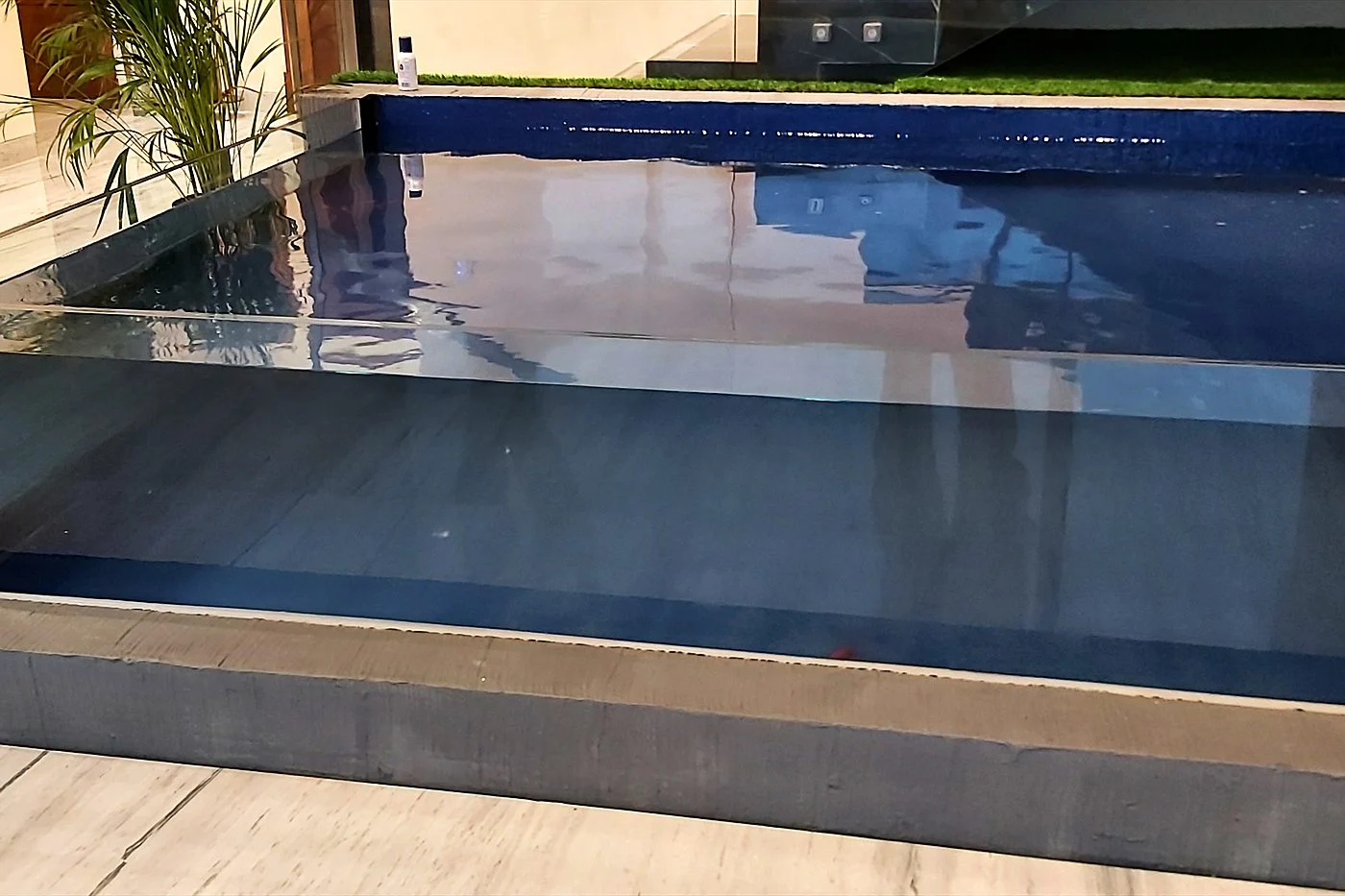
Pool water in a UAE summer does not stay cool by itself. Small, shallow and uncovered pools gain heat quickly, and by August a plunge pool can feel like a warm bath. A chiller is the way to keep it refreshing.
Why a small pool heats so fast
Heat gain depends on surface area, sun exposure and how little water there is to absorb it. A plunge pool has a small volume and often sits on a sunny terrace, so the temperature rises faster than in a large pool. Shade and a cover slow this, but they rarely stop it.
Chiller or heat pump?
A dedicated chiller is built to remove heat. A reversible heat pump can heat and cool, which helps if you want to extend the pool season into winter. For summer cooling the key points are capacity, the ambient temperature the unit is rated for, and where it breathes.
How a chiller is sized
There is no single figure per litre. The calculation weighs the pool volume, the temperature you want, the sun load on the water surface, whether it is covered, and the hottest ambient conditions the unit must work in. Oversizing wastes energy and money; undersizing means the unit runs all day and still loses. We size it per pool.
Where to put it
Chillers need free air to reject heat, and they make noise. A ventilated plant area with enough clearance works. A sealed cupboard on a rooftop does not. Plan the position, the pipe route and the electrical supply before the pool is ordered, especially on a terrace where access is limited.
Running cost
In summer the chiller is usually the biggest electricity item for a small pool. Three things reduce it:
- Shade over part of the water.
- A cover when the pool is not in use.
- A unit that matches the pool, rather than the largest one on the shelf.
Cold plunge
Cooling is what turns a small pool into a cold plunge. If you want genuinely cold water for recovery sessions, the chiller has to be specified for that target temperature from the start, and the pool should be small enough to hold it. See our small pool ideas for how a cold plunge fits into a compact outdoor space.
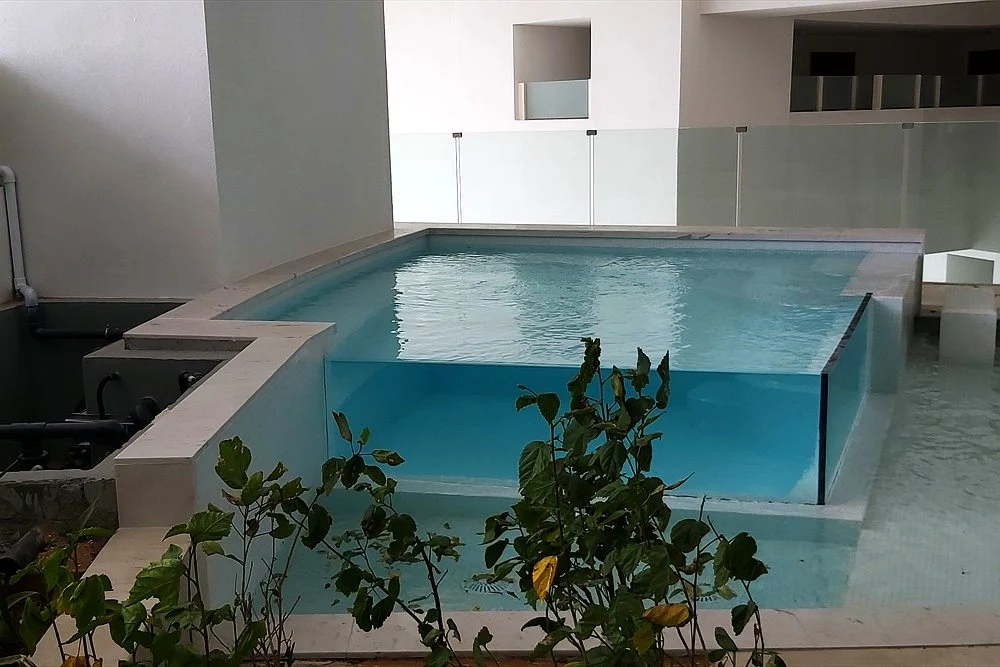
Adding one to an existing pool
It is possible, subject to space for the unit and a pipe route. We would need the pool volume, the pump and filtration details and photos of the plant area. The same thinking applies to aquariums, covered in our aquarium chiller guide.
FAQ
Does a plunge pool really need a chiller in Dubai?
For comfortable use through summer, most owners add one. Without it the water often becomes too warm to be refreshing.
Can I run a chiller in winter?
You usually will not need cooling in winter. A heat pump can heat as well as cool if you want year-round control.
Starting a new plunge pool? Read about what it costs or ask us about cooling for your pool.
Further reading: Chiller (Wikipedia)
For the rest of the routine, see our plunge pool maintenance guide for the UAE.
Signs Your Pool Is Running Too Warm
Many owners only notice a problem once the water stops feeling refreshing. A few practical checks can tell you whether cooling is falling short:
- Water that stays warm after dark. If the temperature barely drops overnight, the pool is storing more heat than it can shed.
- Faster algae growth. Warm water makes it easier for algae and bacteria to multiply, so you may find yourself rebalancing chemicals more often.
- Heavier chlorine demand. Sanitiser is used up more quickly in warm water, and a strong chlorine smell can point to water that is out of balance.
- A chiller that never switches off. If the unit runs continuously and the water still does not reach your target, it is probably undersized or short of airflow.
Choosing a Target Temperature
The temperature you set decides how hard the unit works. A comfortable family pool and a cold plunge are very different goals, so decide how you will use the water before choosing equipment.
- Everyday swimming: a modest drop from the natural summer temperature is usually enough, and it costs far less to maintain.
- Cold plunge sessions: a much lower setpoint means a much larger gap between the water and the surrounding air, so the unit works harder and heat gain matters more.
Each extra degree of cooling adds to the running load, so it is worth choosing a target you will actually use rather than the coldest figure the unit can reach.
Keeping the Unit Healthy
A chiller exposed to heat, dust and humidity benefits from regular attention. Good habits help it hold performance through the hottest months:
- Keep the air path clear. Dust, leaves and stored items around the unit reduce airflow and make it work harder.
- Clean the coil and filters. Dust and sand build up quickly in desert conditions, so check them regularly and clean as the manufacturer advises.
- Maintain water flow. A blocked filter or weak pump flow can trigger faults, so keep filtration serviced.
- Watch water chemistry. Unbalanced water can scale or corrode the heat exchanger over time.
- Book a seasonal service. A check before summer helps catch problems before the hottest weeks arrive.