






 Custom Aquarium Cost in Dubai
 Saltwater vs Freshwater Aquarium
 Swimming Pool Glass Panels in Dubai
 Koi Pond Maintenance in Dubai
 Adidas Liquid Billboard Dubai
 Green Wall Installation in Dubai
In this article
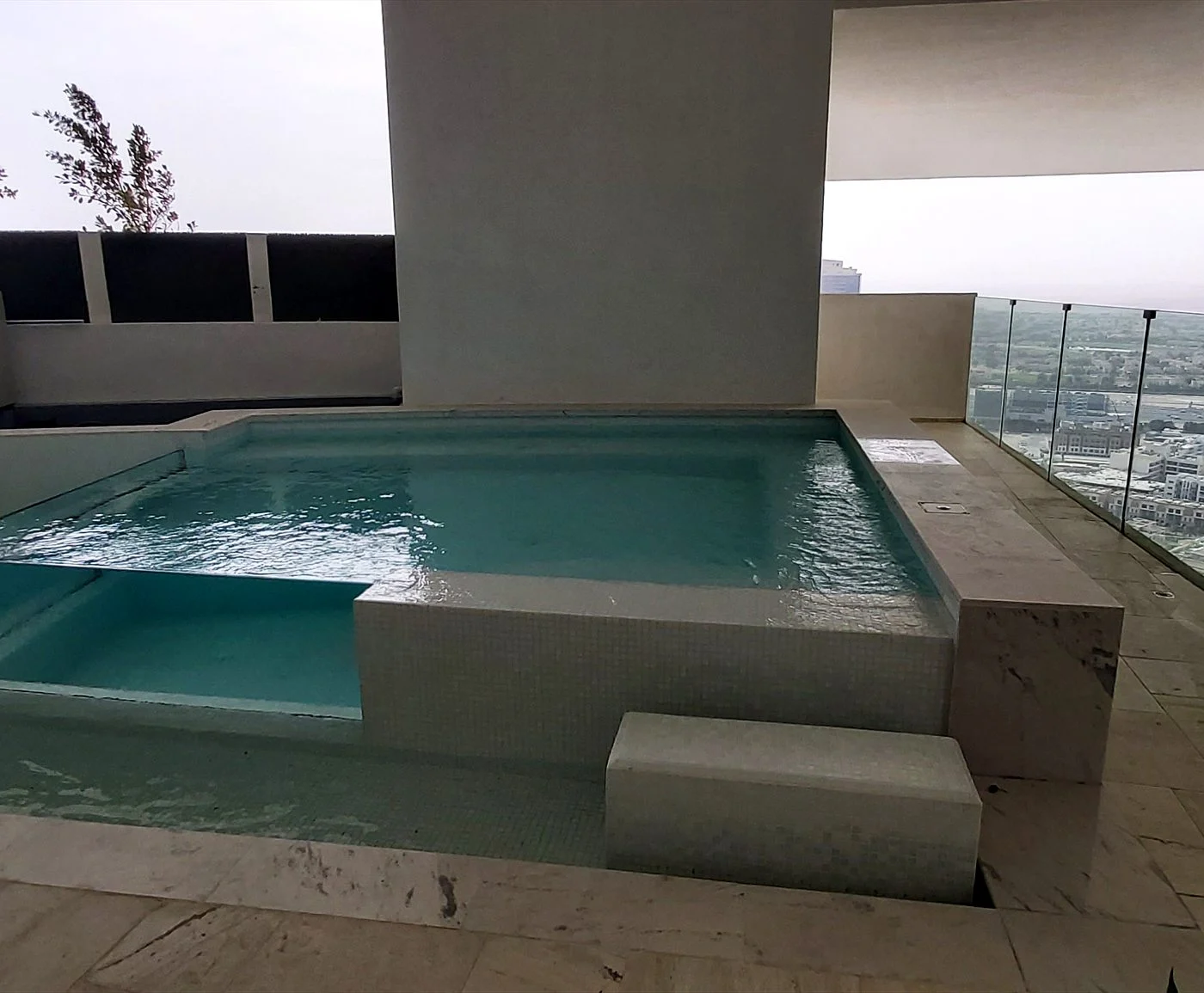
A plunge pool holds far less water than a full-size pool, which makes it quicker to heat, cool and treat, and also quicker to go wrong. Small volumes react fast to sun, dust, swimmers and missed checks. A short weekly routine keeps the water clear, safe and comfortable all year in the UAE. Here is what to do and why.
The weekly routine (about 20 minutes)
- Skim the surface for leaves, dust and insects.
- Empty the skimmer and pump baskets so the circulation is not restricted.
- Brush the walls and floor, including steps and corners where algae starts.
- Vacuum any settled dirt, especially after dusty or windy days.
- Test the water and adjust (see the table below).
- Check the filter pressure or flow, and clean or backwash when needed.
- Check the water level and top up; evaporation is high in summer.
- Wipe the waterline to remove oils and sunscreen residue.
Water chemistry targets
| Parameter | Typical target range | Why it matters |
|---|---|---|
| pH | 7.2 to 7.6 | Swimmer comfort and sanitiser effectiveness |
| Free chlorine | 1 to 3 ppm | Kills bacteria and prevents algae |
| Total alkalinity | 80 to 120 ppm | Keeps pH stable |
| Calcium hardness | 200 to 400 ppm | Protects surfaces and equipment |
These are common guideline ranges; follow the advice for your specific system, especially if you use salt chlorination or an alternative sanitiser. Small pools change quickly, so test more often after heavy use, parties or sandstorms.
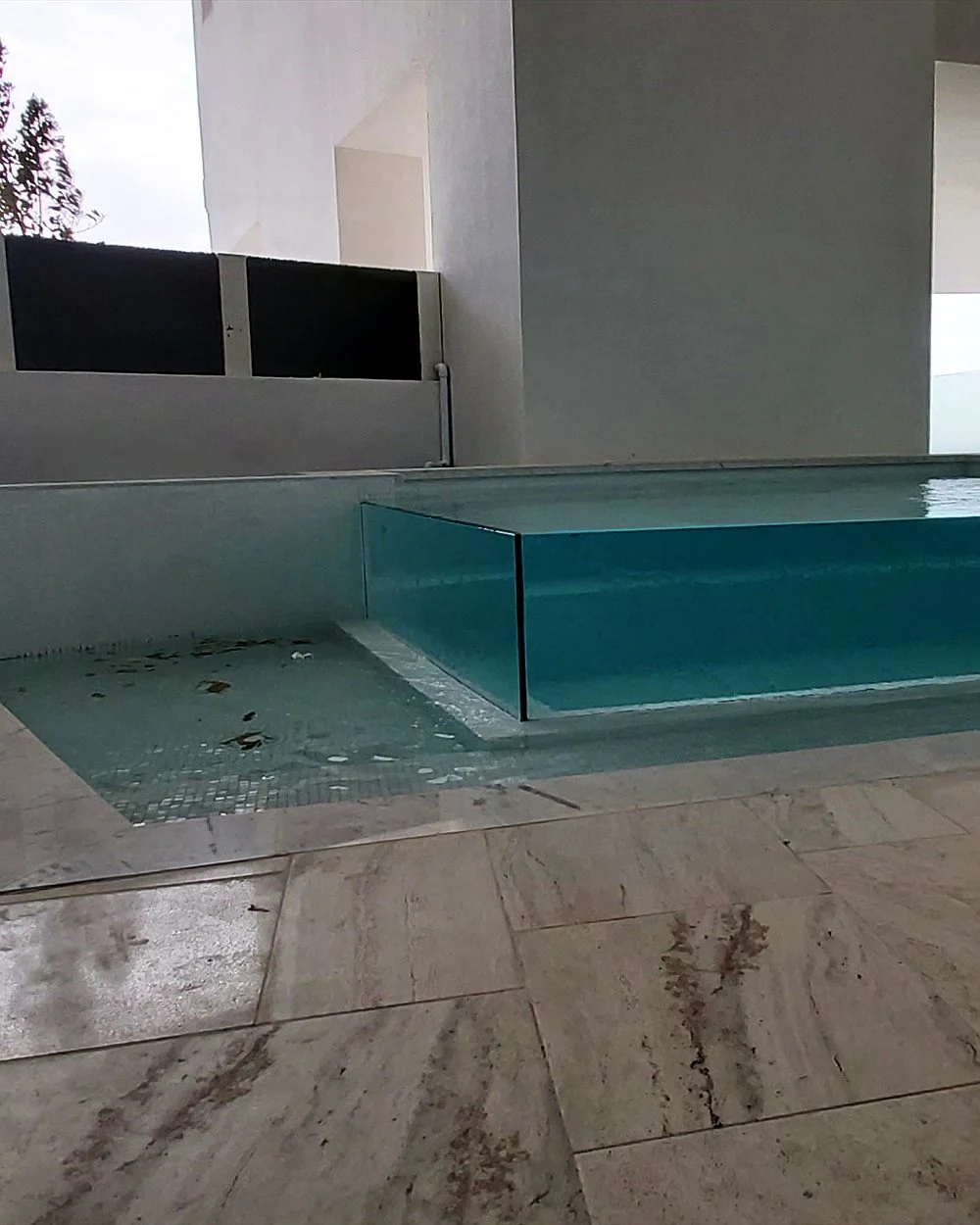
Summer in the UAE
- Heat: warm water uses up chlorine faster and encourages algae. Test twice a week in peak summer.
- Cooling: plunge pools in the sun can get too warm to be refreshing. A pool chiller keeps the water comfortable.
- Evaporation: top up regularly and watch for unusual losses that might signal a leak.
- Cover: a cover reduces evaporation, debris and chemical use when the pool is not in use.
Caring for an acrylic viewing panel
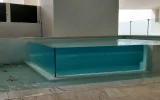
Many modern plunge pools have a clear acrylic wall. It needs gentle care:
- Clean with a soft microfibre cloth or a non-abrasive pad made for acrylic.
- Avoid ammonia-based and abrasive cleaners, scouring pads and hard brushes on the panel.
- Keep sand and grit away from cleaning cloths; trapped grit causes scratches.
- Light scratches can usually be polished out; see our acrylic scratch repair guide.
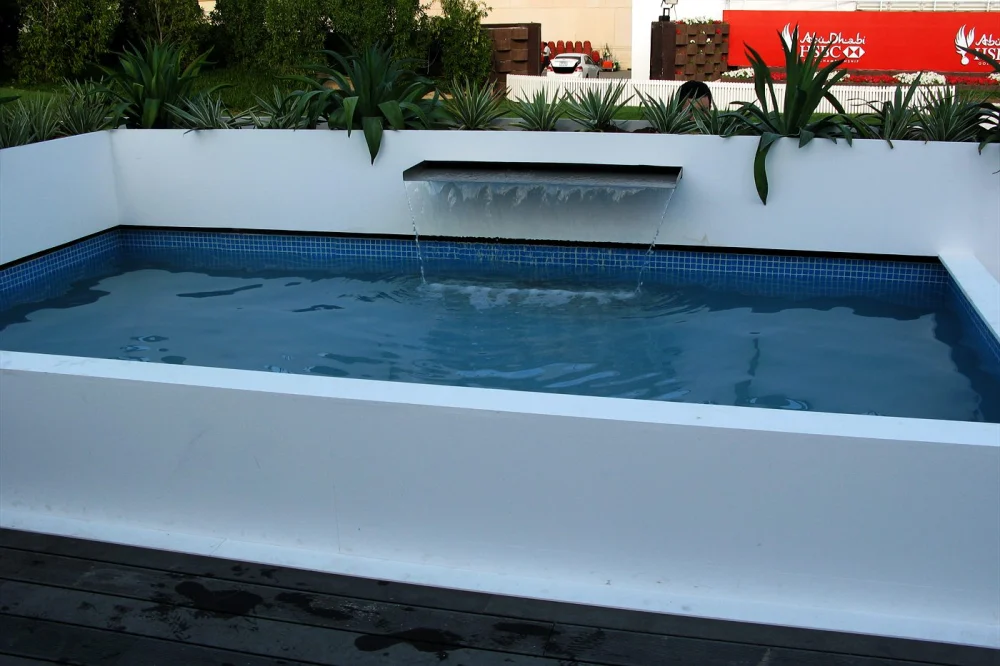
Monthly and seasonal checks
- Deep-clean or replace filter cartridges as recommended.
- Inspect pumps, valves and fittings for leaks or noise.
- Check lighting, timers and any automation.
- Check the condition of seals and joints, including around the panel.
- Before summer, have the chiller serviced.
Common problems and quick fixes
| Problem | Likely cause | Fix |
|---|---|---|
| Green or cloudy water | Low chlorine, poor filtration | Test, shock if needed, clean the filter, brush |
| Stinging eyes | pH out of range or chloramines | Correct pH, shock to clear combined chlorine |
| Scale on tiles | High calcium or pH | Balance chemistry, clean the waterline |
| Water level dropping fast | Evaporation or leak | Compare with a bucket test, call a specialist if loss is higher |
FAQ
How often should a plunge pool be cleaned?
A quick skim and check most days, and the full routine above once a week. Test water chemistry at least weekly, more in summer.
Does a plunge pool need a chiller in Dubai?
Not always, but for pools in full sun it keeps the water refreshing through summer.
Can I use normal glass cleaner on the acrylic panel?
No. Many glass cleaners contain ammonia, which can damage acrylic. Use products made for acrylic.
What if the water will not clear?
Check the filter, circulation and chemistry first. If the problem continues, or you see a sudden drop in level, ask a specialist to inspect the system. You can contact our team for advice on aftercare.
For new pools, see modern plunge pools and our plunge pool cost guide, or request a quotation.
Further reading: Healthy swimming (CDC)
If you are planning a new plunge pool and like the idea of a clear viewing side, explore a swimming pool with glass panel and how it affects cleaning access.
For projects where the plunge pool includes a viewing window or transparent wall, our team can advise on Swimming Pool Glass & Acrylic Panels UAE and how they affect maintenance access.
For projects where a compact pool is not the only option, architects and developers can also review how engineered clear-panel designs are handled in our Glass Swimming Pool Dubai guide.
How to Shock a Plunge Pool Safely
Because a plunge pool holds so little water, a dose of shock that suits a large pool can overshoot badly. Always work out the dose from your actual volume and the product label rather than guessing.
- Test and correct pH first, as chlorine works best within the 7.2 to 7.6 range.
- Dose in the evening, when the sun is not breaking down chlorine, and keep the pump running.
- Pre-dissolve the product in a bucket of pool water if the label says to, and pour it in slowly near a return jet.
- Keep swimmers out until free chlorine has dropped back to the normal range on a fresh test.
- Run the filter for several hours afterwards and brush the walls to lift any loosened algae.
Never mix different chemicals together, and add chemicals to water, not water to chemicals. Store them sealed, cool and dry, away from direct sun.
Understanding Your Water Test Results
A single reading rarely tells the whole story. Look at how the numbers relate to each other before adding anything.
- Adjust alkalinity before pH. Alkalinity acts as a buffer, so correcting it first usually makes pH easier to hold steady.
- Change one thing at a time. In a small pool, wait for the water to circulate fully, then retest before adding more.
- Watch for chlorine that disappears. If free chlorine keeps falling soon after dosing, suspect heat, sunlight, heavy bather load or algae using it up.
- Use fresh reagents. Old test strips or drops that have sat in a hot store room can give misleading results.
- Sample correctly. Collect water from about elbow depth, away from jets and the skimmer.
Keep a simple log of dates, readings and what you added. Patterns such as a steadily rising pH or repeated chlorine loss help you spot the cause sooner.
Draining, Refilling and Long Absences
Plunge pools are small enough to drain and refill, but do it carefully. Check the manufacturer’s guidance first, since an empty shell can be affected by ground water pressure depending on the construction, and acrylic panels should not be left exposed to direct sun and heat without water behind them.
- Drain only when needed, for example when dissolved solids build up and the water stays dull despite correct chemistry.
- Refill promptly and re-balance the water before use.
- Dispose of drained water responsibly and follow local rules.
If you will be away for a few days or weeks, balance the chemistry before you leave, clean the filter, fit the cover and keep circulation running on its timer. Ask someone to check the level and clarity if you are gone for an extended period, so a small problem does not become a green pool by the time you return.