



 Custom Aquarium Cost in Dubai
 Saltwater vs Freshwater Aquarium
 Swimming Pool Glass Panels in Dubai
 Koi Pond Maintenance in Dubai
 Adidas Liquid Billboard Dubai
 Green Wall Installation in Dubai
In this article
Short answer: possibly, and it depends on where the pool is going. We are a pool supplier and installer, not the authority that approves them, so use this page as a checklist of what to ask. Always confirm current requirements with the relevant authority and your community before you commit to a date.
Who decides?
In practice there are usually two layers. The first is the community or master developer, which often wants to see drawings and give a no-objection certificate (NOC) before any structure or pool is added to a plot. The second is the government approval route that applies to the type of property and the work. The mix changes between a freehold villa, a townhouse in a managed community and an apartment terrace, so start by asking your community management what they require.
What approvals usually look for
- Where the pool is positioned, and its distance from boundaries and neighbours.
- Structural loads, particularly on a podium, terrace or roof.
- Services: water, drainage, electrical supply and the position of the plant.
- Safety features for a pool that is accessible to children.
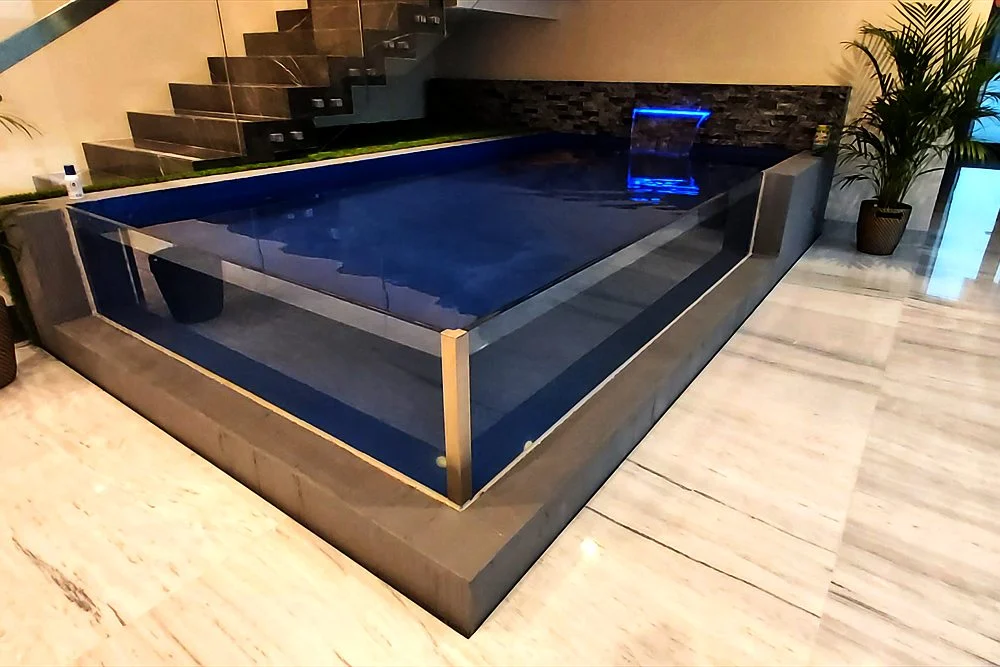
Rooftops and upper floors
A roof or terrace pool needs an engineer to confirm that the structure can carry it, the water included. Lightweight modular pools reduce the dead load but do not remove the need for the check, and the building’s owner or management company usually wants to see the result.
Does a prefabricated pool avoid approvals?
No. It is faster to install and lighter on the structure, but the rules about the plot and the community apply in the same way. The advantage is that the installation itself is short: for fully prefabricated, plug-in applications our window is 1 to 7 days, and up to 30 days when the site needs preparation first.
What we can provide
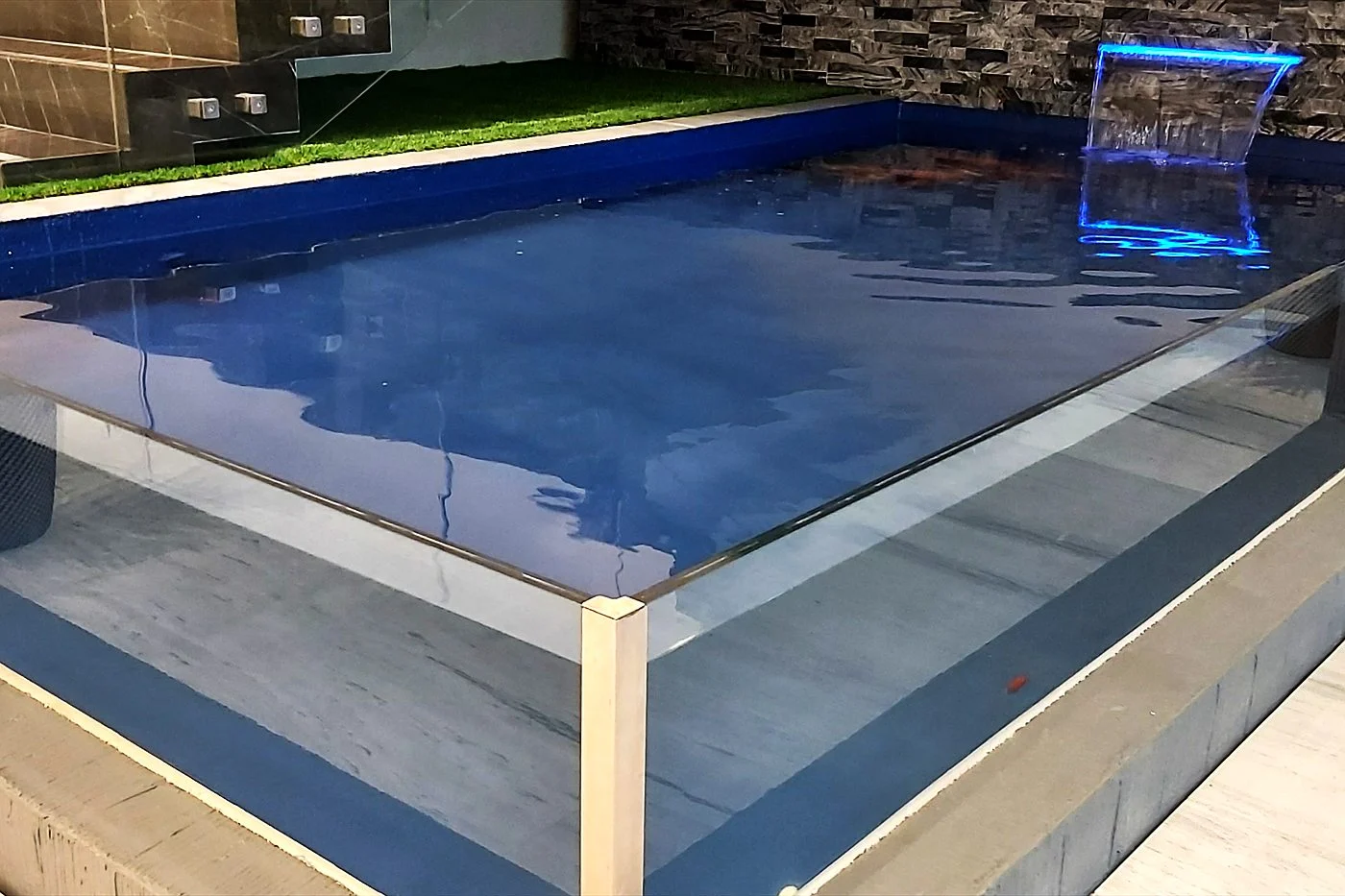
For an LMP plunge pool, ask us for the technical details of the pool you are considering, such as its dimensions and service connections, so you can pass them to your community or consultant. What is submitted, and to whom, stays your decision and your community’s.
A sensible order of work
- Ask your community what they need for a new pool.
- Send us the location and rough size, and book a survey.
- Get structural advice if it is above ground level.
- Submit the approvals, then order.
Costs are explained in our plunge pool cost guide, which starts from AED 35,000 for the pool itself.
FAQ
What is a community NOC?
A written no-objection from the developer or community management that allows the work to go ahead. They often ask for drawings first.
How long do approvals take?
It varies by authority and community, so we do not give a fixed figure. Ask early and plan the installation after the approval date.
Can you manage the approval for me?
We support the technical side. Please confirm with us what is included in your quotation.
Planning a pool? Tell us the location and we will tell you what to prepare.
Further reading: Dubai Municipality
Once your pool is approved and installed, it helps to know what upkeep to expect, so read our guide to Plunge Pool Maintenance before you plan the project.
If your plans include a heated or cooled plunge pool in the Gulf climate, it is worth reading about the Pool Chiller in the UAE before finalising the plant position.
Documents to Gather Before You Ask for Approval
Community managers and consultants tend to respond faster when your request arrives complete. Having the following ready can shorten the back-and-forth:
- Title or ownership proof for the villa, townhouse or unit, plus the owner’s ID.
- A site plan marking the proposed pool position and the distances to boundaries and neighbouring properties.
- Pool dimensions and depth, along with the weight of the pool when filled.
- Service details: where water will be drawn from, how it drains, the electrical load and where the pump and filter equipment will sit.
- Photos of the proposed area, which help the reviewer understand access and existing features.
- Access route for delivery, including gate widths and whether a crane or lifting equipment is needed.
Requirements differ between communities, so treat this as a starting list and ask your community management for their own form or checklist.
Common Reasons a Pool Request Is Delayed or Rejected
Most delays come from preparation gaps rather than from the pool itself. Typical causes include:
- Incomplete drawings that do not show distances, levels or equipment locations.
- No structural confirmation for a terrace, podium or roof.
- Plant equipment placed where it could disturb neighbours, for example near a shared wall, because of noise or drainage.
- Unclear drainage, especially where discharge could reach a neighbouring plot or a shared area.
- Ordering before approval, which leaves a pool waiting on site or in storage while the paperwork catches up.
- Missing safety measures where children could reach the water.
Asking one question early, such as what the community needs to see before it will issue an NOC, usually prevents most of these.
Planning Around Approval Dates
Because the approval timeline is outside your supplier’s control, build your schedule backwards from the approval rather than forwards from the pool delivery.
- Confirm the approval is in writing before you pay a final deposit or fix an installation date.
- Check whether any conditions are attached, such as permitted working hours, delivery windows or a requirement for neighbour notice.
- Ask whether the approval has an expiry date, so you do not lose it if the project is postponed.
- Keep copies of all approvals and drawings. If you sell or lease the property later, the next owner or the management company may ask for them.
If a change is needed after approval, such as a different size or a new position, check with your community before going ahead, since a revised design may need to be reviewed again.