






 Custom Aquarium Cost in Dubai
 Saltwater vs Freshwater Aquarium
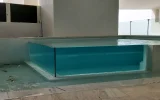
 Swimming Pool Glass Panels in Dubai
 Koi Pond Maintenance in Dubai
 Adidas Liquid Billboard Dubai
 Green Wall Installation in Dubai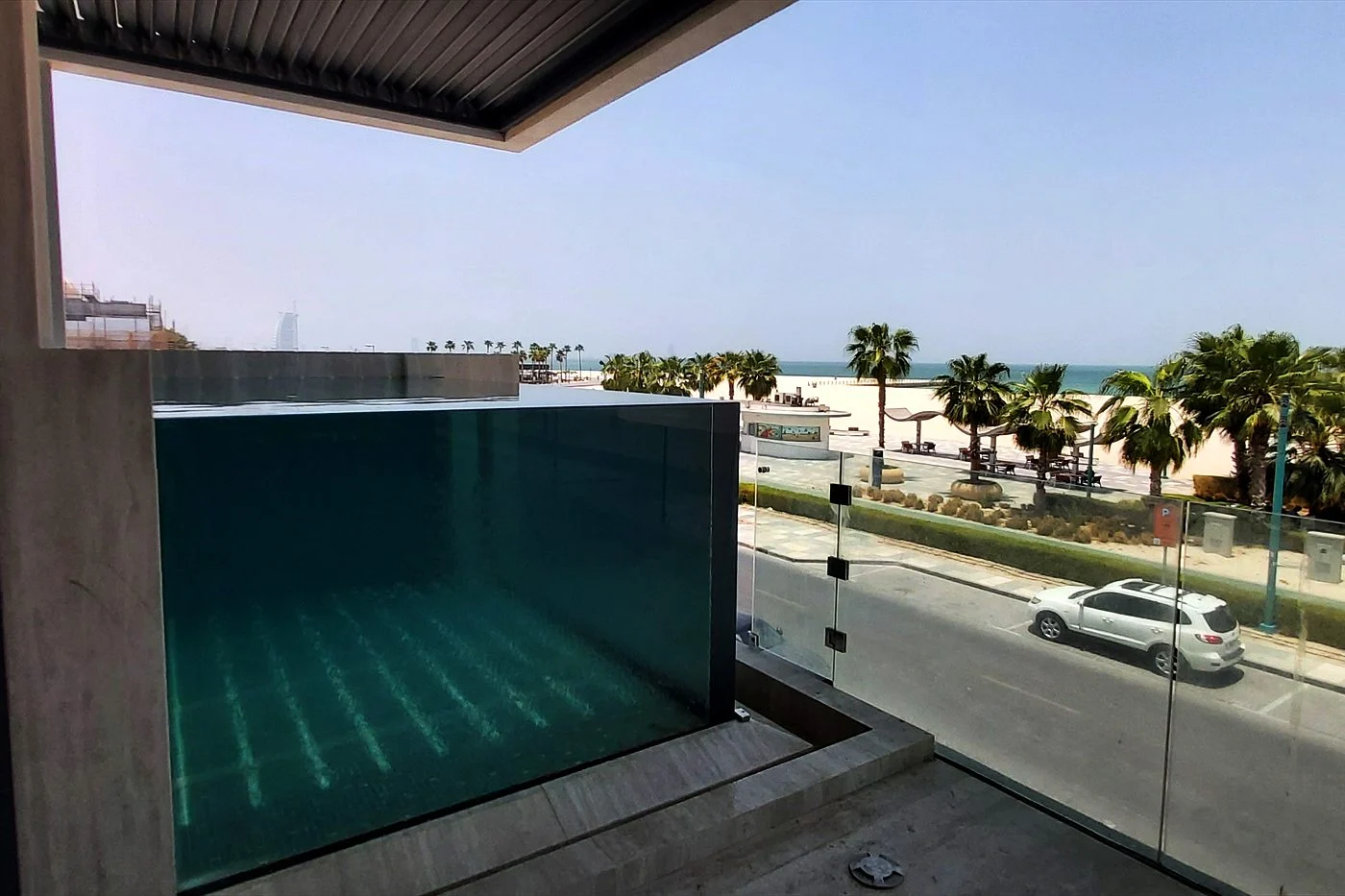
In this article
If you want a transparent wall or window in a swimming pool, the first technical choice is the material. A pool acrylic panel and a laminated glass panel both do the job, but they behave differently once they are loaded with water, sun and several years of use.
What they have in common
Either material is a structural part of the pool. It must resist the pressure of the water behind it, stay watertight at its edges and remain clear. For that reason neither is chosen from a catalogue. Each panel is calculated for its water depth, its span and the way it is supported.
Acrylic panel: strengths
- Weight. Acrylic is less than half the weight of glass, which makes large panels easier to handle and support.
- Size and shape. Sheets can be bonded into very large continuous panels and formed into curves, which glass cannot do on the same terms.
- Clarity. Optical-grade acrylic is very clear even when thick, with no green tint.
- Repairable surface. Fine scratches can be polished out.
Acrylic panel: limits
It scratches more easily than glass, and it must be cleaned with soft cloths and non-abrasive products, never ammonia-based or solvent cleaners. Acrylic also carries sustained load differently from glass, which a competent designer allows for, and it is why thickness is never guessed.
Laminated glass: strengths
- Very resistant to surface scratching.
- Rigid, with a hard, familiar feel.
- Good for smaller, flat panels and for pools where the glass is part of a wider architectural glazing scheme.
Laminated glass: limits
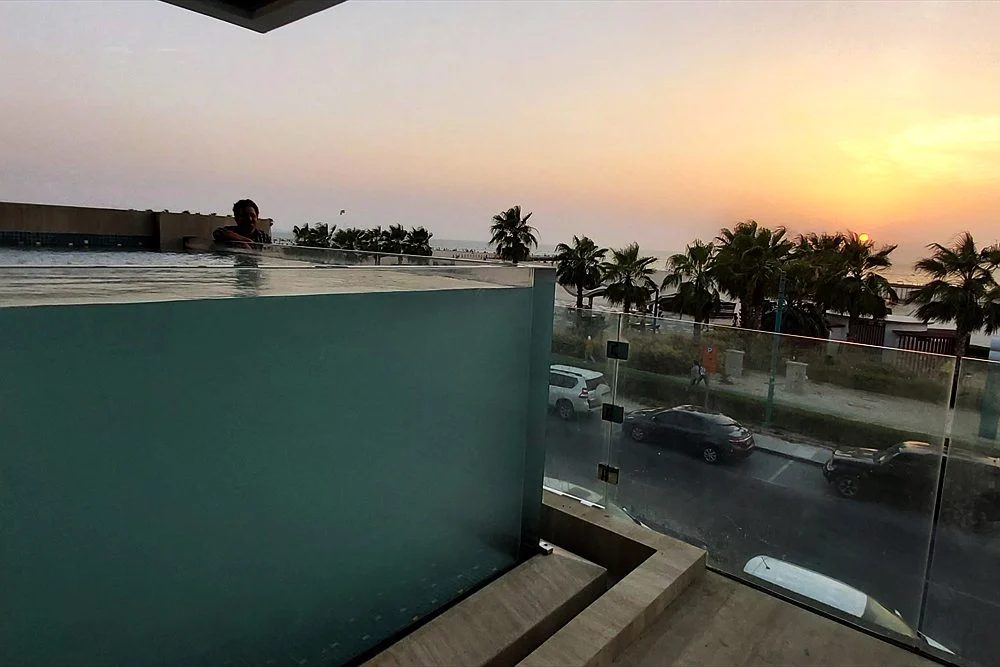
It is heavy, so supports and handling cost more. Thick standard glass shows a green edge, which low-iron glass reduces. Curves and very large single spans are difficult. A damaged surface usually means replacing the pane.
How thickness is decided
Thickness comes from the height of water above the panel, the panel’s width and height, how its edges are held and the safety factor the engineer applies. A short, shallow window and a long, deep wall need very different sections. Figures from one pool should never be copied to another, which is why we do not publish a thickness chart.
Bonding and sealing
A clear wall is only as good as its edge. Acrylic sections can be chemically bonded, then polished so the joint disappears. Glass relies on precise framing and sealants. Most leaks start at the interface with the pool structure, not in the material, which is why installation matters as much as the sheet.
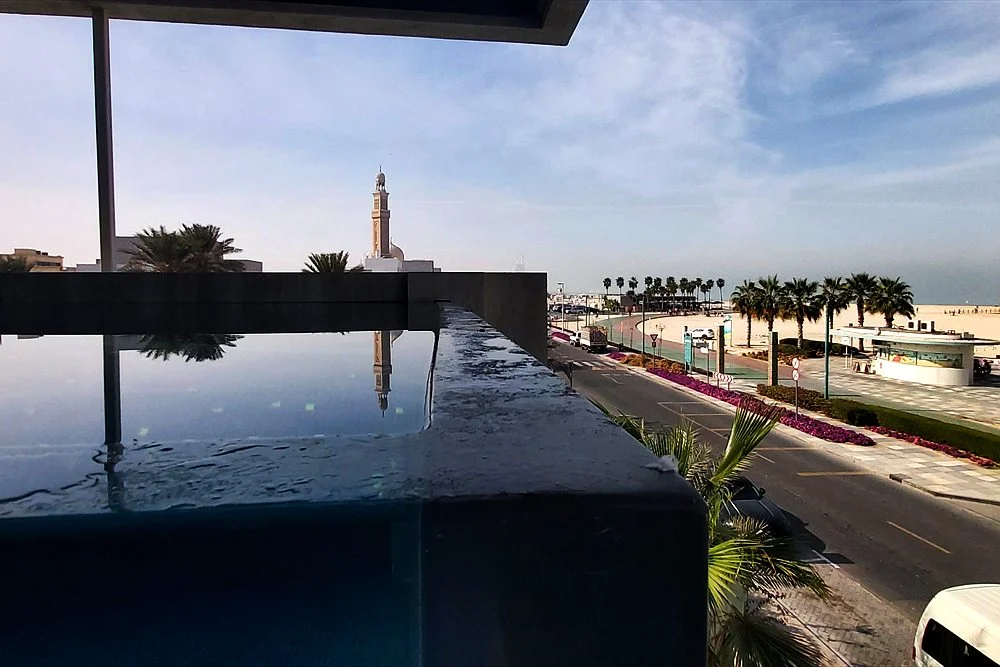
Which should you choose?
- Large, curved or seamless: acrylic.
- Small, flat, scratch-sensitive: glass can be sensible.
- Underwater window in a deep pool: usually acrylic, with the thickness engineered for the depth.
- Unsure: describe the pool and we will recommend a material, and tell you if we think the other one is better.
Pool clear viewing panels from Water Wonders start from AED 10,000. The service is described on our swimming pool clear panel page, and a broader look at design and safety is in the glass panel guide.
FAQ
Are acrylic pool panels safe?
Yes, when the panel is engineered for the load and installed with a proper sealing system. Safety comes from the calculation and the installation, not the material name.
Does acrylic turn yellow?
UV-stabilised cast acrylic of good quality is specified for outdoor, sunlit use. Cheap sheet is the one that causes problems.
Can I fit a panel to an existing pool?
Sometimes. It depends on the existing wall and structure, so it needs a survey first.
If you are planning a panel, send us the pool depth and the wall you have in mind.
Further reading: Acrylic glass, PMMA (Wikipedia) | Laminated glass (Wikipedia)