


 Custom Aquarium Cost in Dubai
 Saltwater vs Freshwater Aquarium
 Swimming Pool Glass Panels in Dubai
 Koi Pond Maintenance in Dubai
 Adidas Liquid Billboard Dubai
 Green Wall Installation in Dubai
In this article
Both GRP and LMP pools are prefabricated: the pool is made in a controlled workshop instead of being built on your plot. That is where the similarity ends. Choosing between them depends on the site, the size you need and how you plan to use the pool. This guide sets out the differences plainly, including where a GRP pool is the sensible choice and where LMP is.
What is a GRP pool?
GRP stands for glass-reinforced plastic, better known as fibreglass. A GRP pool is normally a single shell moulded in a factory with a smooth gelcoat surface. It is delivered to site, usually by truck and lifted into an excavation by crane, then backfilled around the shell and connected to filtration and services.
What is an LMP pool?
LMP stands for lightweight, modular, prefabricated. Water Wonders supplies LMP pools for villas, townhouses, offices, hotels and commercial spaces, indoors and outdoors. The pool is manufactured in advance, so the work on site is short, and it can be installed above ground, semi in-ground or in-ground. Selected systems can also be rented for events and exhibitions. See the LMP plunge and swimming pool page.
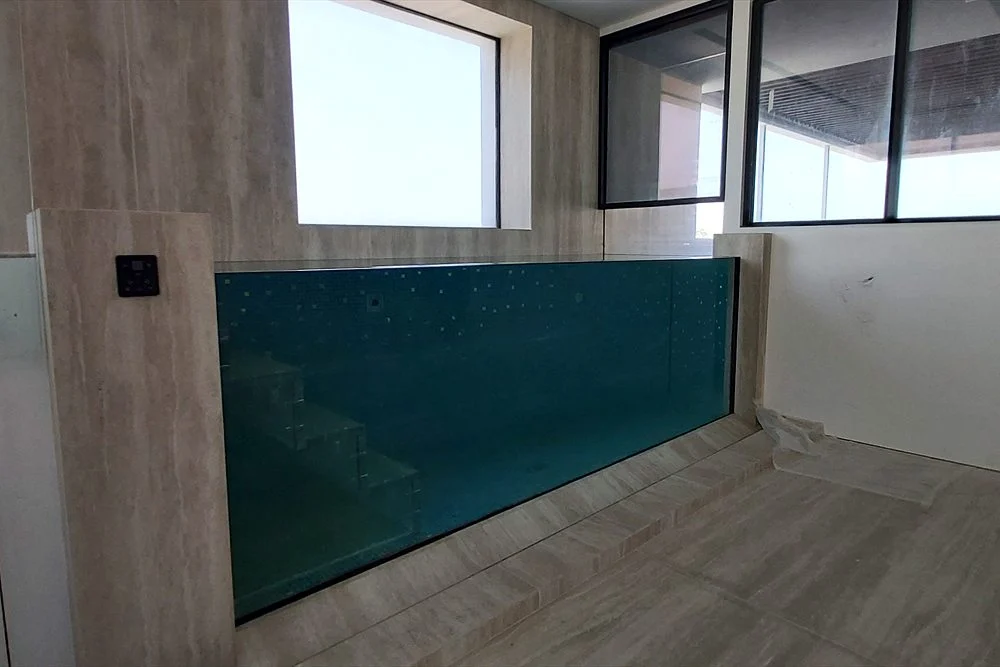
The differences that matter
| Question | GRP pool | LMP pool |
|---|---|---|
| How it is made | One moulded shell | Lightweight modular, prefabricated system |
| Installation | Usually excavation, crane lift and backfill | Above ground, semi in-ground or in-ground |
| Indoor use | Possible where the shell can be delivered and placed | Designed for indoor and outdoor settings |
| Rooftops and terraces | Depends on the weight and the structure | Lightweight by design, still needs a structural check |
| Size and shape | Fixed by the mould, limited by what can be transported | Adaptable configurations, from plunge pools to larger pools |
| Temporary use | Not a rental product | Selected systems available for events and exhibitions |
| Repair | Shell damage needs specialist repair | Ask for details of the specific system |
Access and delivery
A one-piece shell has to reach the plot as one piece. That means a wide enough route for the truck, space for a crane and clearance above the access path. A tight courtyard, a villa behind a narrow gate or an upper floor can rule it out. A modular system is designed around the opposite problem: getting a pool into places where large single components cannot go.
Where each one fits
GRP is a sensible choice when
- the plot is open and a delivery truck and crane can reach it;
- you want a ground-level, in-ground pool in a standard shape;
- the pool is a permanent garden feature.
LMP is a sensible choice when
- the pool goes on a terrace, rooftop, courtyard or indoors;
- access is limited or the building is occupied;
- you want above-ground or semi in-ground installation;
- the pool is for an event or exhibition and should not be permanent.
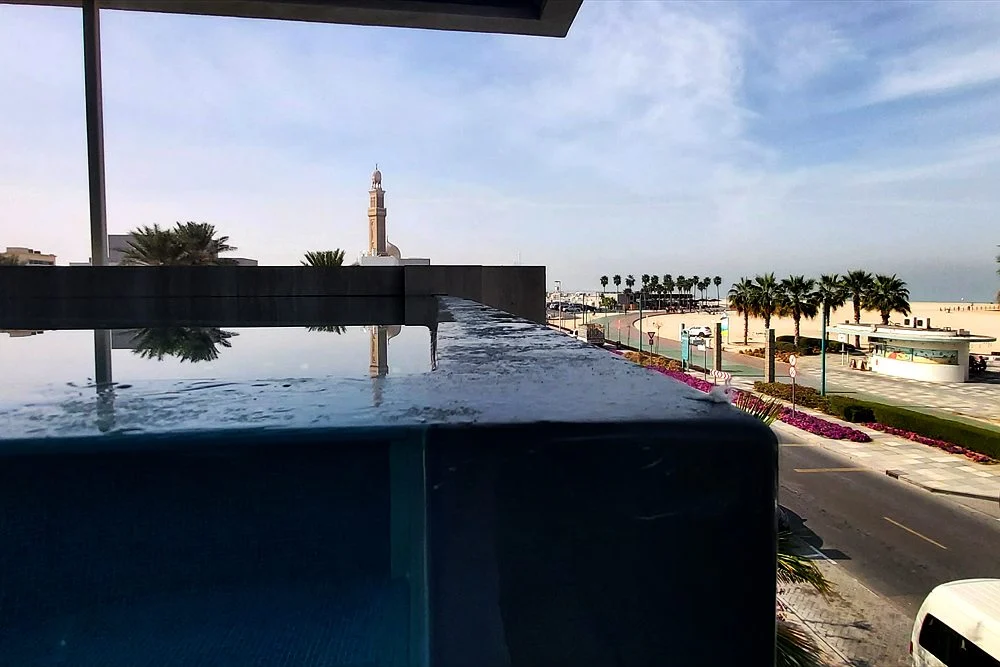
What both still need
- Structure. Water is heavy, and any pool above ground level must be checked by an engineer.
- Cooling. In a UAE summer, small pools heat quickly, see pool chillers in the UAE.
- Approvals. Community and authority rules apply to any pool, see whether a plunge pool needs a permit.
Clear panels
A transparent acrylic or glass viewing panel can be paired with an LMP pool. It is engineered for the depth of water behind it, which is explained on our pool clear panel page.
Cost and timing
Our LMP plunge pools start from AED 35,000. For fully prefabricated, plug-in installations the installation window is 1 to 7 days, and up to 30 days where site preparation is needed. For a GRP pool, ask the supplier for a written quotation and programme, because they depend on the shell, the excavation and the access. If you want a price for an LMP pool, see how much a modern pool costs in Dubai.
How to choose
- Measure the access route, not just the pool position.
- Decide whether the pool is permanent, and whether it is indoors, on a roof or on the ground.
- Ask each supplier what is included: shell, filtration, installation, finishing and warranty.
- Get the structure checked if it is not on the ground.
FAQ
Is LMP better than GRP?
Neither is better in every case. GRP suits open sites with crane access. LMP suits terraces, indoor spaces and tight access, and offers event rental.
Can an LMP pool be a swimming pool and not only a plunge pool?
Yes. LMP configurations range from compact plunge pools to larger pools for residential and commercial use.
Do you supply GRP pools?
Water Wonders supplies LMP pools. If you are comparing, ask each supplier for a written scope and warranty.
Not sure which suits your site? Send us the location and access photos and we will tell you honestly whether LMP is the right fit.
Further reading: Fiberglass (Wikipedia) | Swimming pool (Wikipedia)
Questions to Ask Before You Commit
Whichever type you lean towards, a short list of questions will separate a clear quotation from a vague one. Ask every supplier to answer them in writing.
- What exactly is included? Shell or modules, filtration, pumps, lighting, steps, finishing, delivery and installation should each be listed.
- What is the access plan? Ask who is responsible for the truck route, crane hire, road permits and any building management requirements.
- What does the warranty cover? Ask for the length, what is excluded, and whether it covers the structure, the surface and the equipment separately.
- What preparation is expected from you? This might include excavation, a level base, drainage, power supply and a water connection.
- What happens if something goes wrong? Ask how repairs are handled and who you contact for service after handover.
Common Mistakes When Comparing Prefabricated Pools
Most disappointments come from a few avoidable assumptions rather than from the pool type itself.
- Comparing headline prices only. One quote may include crane work, groundworks and finishing while another leaves them out. Compare like with like.
- Forgetting about ground conditions. An in-ground pool of any type is affected by soil, groundwater and drainage, so a site survey matters.
- Ignoring the route to the pool. Gates, stairs, lifts, overhead cables and tight corners are often discovered too late.
- Treating a rooftop like a garden. Raised installations add load, waterproofing and drainage concerns that need an engineer’s input.
- Overlooking running needs. Filtration, heating or cooling, cleaning and water top-ups continue long after installation.
Day-to-Day Care and Long-Term Use
Both types need regular water testing, filter cleaning and surface care. A smooth surface is generally easier to wipe down, but the right routine depends on the finish and the manufacturer’s guidance, so follow the care instructions supplied with your pool.
Think about how the pool will be used over the years. A family garden pool that is used daily has different needs from a small plunge pool for occasional cooling off, or a pool set up for a temporary exhibition. Matching the pool to the real pattern of use usually matters more than any single specification.
Tip: if your plans might change, such as moving home or redesigning a terrace, ask each supplier whether the pool can be relocated or reconfigured, and at what effort.
Need a pool with a clear viewing wall? Learn about our glass swimming pools in Dubai.