
 Custom Aquarium Cost in Dubai
 Saltwater vs Freshwater Aquarium
 Swimming Pool Glass Panels in Dubai
 Koi Pond Maintenance in Dubai
 Adidas Liquid Billboard Dubai
 Green Wall Installation in Dubai
In this article
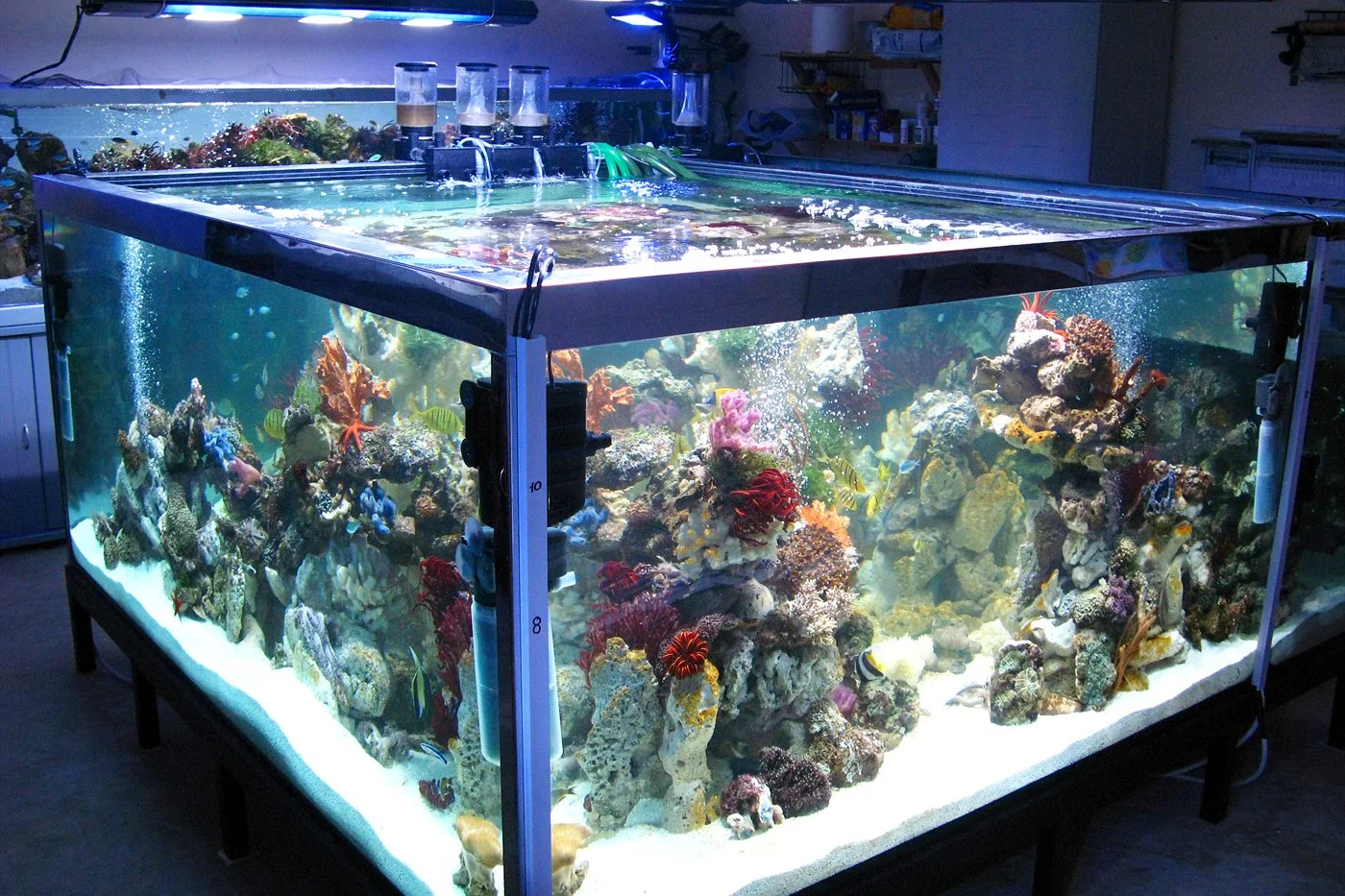
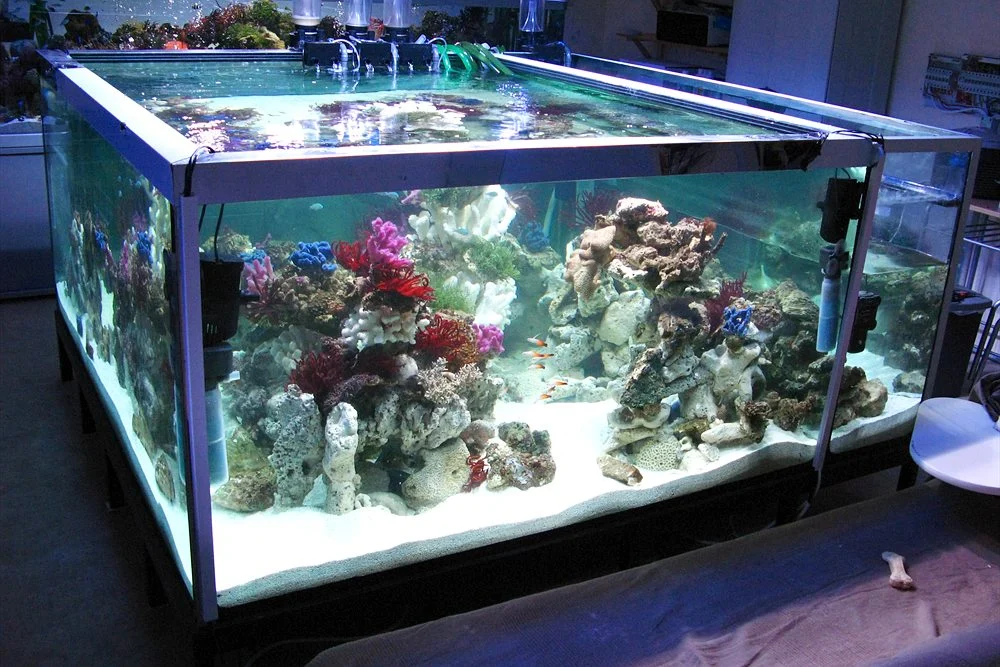
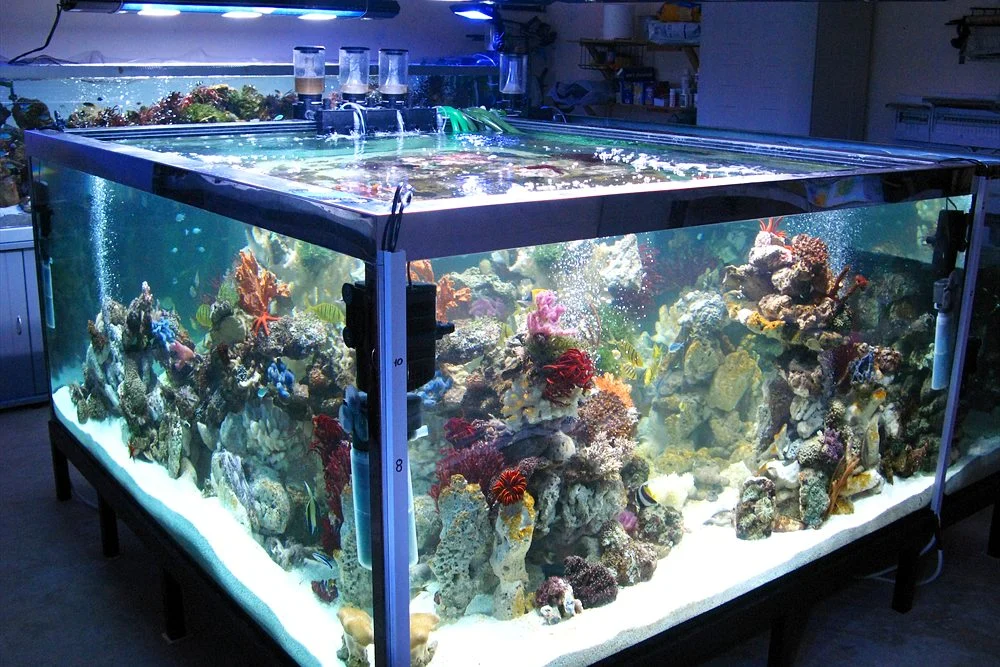
The tank you see is half the aquarium. The other half is the life support system (LSS): the equipment that removes waste, keeps the water chemically safe and holds the temperature. In a custom tank it is designed together with the tank, since both depend on each other.
The sump
A sump is a second tank, usually hidden in the cabinet or the plant room beneath the display. Water flows down to it, passes through the filtration and is pumped back. It adds water volume, which makes the system more stable, and gives you a place for heaters, chillers and other equipment, so the display stays free of clutter.
Mechanical filtration
Solid waste has to be caught before it breaks down. Filter socks, screens or mats remove particles from the flow and need cleaning at a regular interval. A larger, easier-to-reach mechanical stage means fewer problems later.
Biological filtration
Fish release ammonia, which is toxic. Bacteria living on filter media convert it to nitrite and then to the much less harmful nitrate. The media needs a large surface area and a steady flow of oxygenated water. This is why a new tank must cycle before fish are added.
Ultraviolet sterilisation
A UV unit exposes passing water to ultraviolet light, which treats free-floating algae and some pathogens. It is useful in warm conditions and for tanks that tend to turn green, although it works alongside, not instead of, good filtration.
Cooling and heating
In the UAE the thermal system is critical. A chiller keeps the tank in its range through summer, and the unit must be sized for the volume and heat load. See aquarium chillers in the UAE.
Controls and monitoring
Timers, level sensors and temperature alarms make a tank safer, especially when nobody is around. Monitoring is most valuable during holidays and power cuts.
Designing the system with the tank
We specify the sump, filtration, cooling and controls at the engineering stage, in line with the volume, the species and where the plant will sit. The hidden parts are accessible for service, because a system that is hard to reach is a system that gets neglected. The whole route is described in our aquarium installation process.
FAQ
Do all aquariums need a sump?
No, but larger and custom aquariums benefit from one, because of the extra volume and the hidden space for equipment.
How often should the filter be serviced?
It depends on the system and its load. Regular visits stop small problems growing, see aquarium maintenance cost.
Want a system engineered for your tank? Ask us or see the custom aquarium service.
Further reading: Aquarium filter (Wikipedia) | Sump (Wikipedia)
What an aquarium life support system includes
An aquarium life support system is the set of equipment that keeps water suitable for living animals. Whatever the size or species, it has to do five jobs continuously:
- Circulation: pumps move water from the display to the treatment stages and back.
- Waste removal: mechanical filtration catches solids, and protein skimmers or similar units remove dissolved organics in marine systems.
- Biological conversion: bacteria process ammonia and nitrite into nitrate.
- Gas exchange: oxygen must come in and carbon dioxide must leave, through surface agitation, aeration or a degassing stage.
- Temperature and water quality control: heaters, chillers, UV units and top-up systems keep conditions steady.
In the trade the term is often shortened to LSS. Public aquariums, aquaculture sites and large private installations all use the same principles, differing mainly in scale and redundancy.
Skid-mounted and packaged LSS
On larger projects the equipment is often built as a skid: pumps, filters, pipework and valves mounted on one frame and assembled and tested before delivery. This shortens site work and makes it easier to check for leaks and flow problems before the system is connected to the tank.
A skid suits projects where the plant room is separate from the display, or where the equipment must fit a tight space. Its drawbacks are that the frame has to be planned around the room, the doors and the route for moving it, so the layout should be fixed early.
Freshwater, marine and seafood holding systems
The same building blocks are arranged differently depending on the animals.
- Freshwater: usually simpler, with the emphasis on mechanical and biological filtration and stable temperature.
- Marine: adds skimming, salinity control and often tighter temperature limits, and corals and invertebrates are less tolerant of swings.
- Seafood and live-holding tanks: built for high stocking densities, so they need larger biological capacity, strong aeration and oxygen monitoring, and easy cleaning for hygiene.
Always confirm the requirements of the species with a qualified aquarist, as tolerances vary widely.