
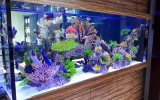


 Custom Aquarium Cost in Dubai
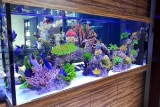 Saltwater vs Freshwater Aquarium
 Swimming Pool Glass Panels in Dubai
 Koi Pond Maintenance in Dubai
 Adidas Liquid Billboard Dubai
 Green Wall Installation in Dubai
In this article
A reef aquarium can be beautiful and responsible at the same time. The choices made when stocking it, especially where the corals and fish come from, decide how much pressure the hobby puts on wild reefs. This guide explains the difference between wild-collected and aquacultured livestock, why it matters, and how to plan a reef aquarium in the UAE that is easier to keep and kinder to the ocean.
Wild-collected vs aquacultured corals
Wild-collected corals are taken from natural reefs. Aquacultured (or maricultured) corals are grown from fragments in farms or in aquariums, then cut and grown on again. Many popular soft corals, LPS and SPS species are now widely available as aquacultured pieces.
| Wild-collected | Aquacultured | |
|---|---|---|
| Impact on reefs | Removes coral from the wild | Little or no direct impact once established |
| Adaptation to aquariums | Often needs time to adjust | Already used to captive conditions |
| Pests and hitchhikers | Higher risk | Lower risk, though still worth inspecting |
| Survival after transfer | More variable | Usually better |
For most home and office reefs, aquacultured corals are simply the better choice: they settle faster, carry fewer pests and come without the cost to a natural reef.
Regulation: the CITES framework
International trade in stony corals and many other reef species is regulated under CITES, the Convention on International Trade in Endangered Species, and the UAE is a party to the convention. In practice this means reputable suppliers work with documented livestock. When you commission a reef, ask where the corals and fish come from and whether they were farmed or collected.
Fish: captive-bred where possible
A growing list of marine fish is bred in captivity, including several clownfish, gobies, dottybacks, some blennies and certain cardinalfish. Captive-bred fish usually accept prepared foods readily and are hardier in aquariums. Wild fish still have a place, but choosing species with a good record in captivity and stocking at a sensible density makes a reef more stable.
A stable system is a sustainable system
The most sustainable reef is the one where livestock thrives for years, so nothing needs replacing. That comes down to engineering and care:
- Stable temperature. UAE summers push water temperatures up. A correctly sized aquarium chiller protects corals from heat stress.
- Proper life support. Protein skimming, filtration and flow sized to the tank, as explained in our life support system guide.
- Appropriate lighting. Matched to the corals and introduced gradually; see our LED lighting guide.
- Quarantine. New fish and corals are checked before they join the display, which prevents diseases and pests spreading.
- Regular maintenance. Testing, water changes and equipment checks stop small problems becoming losses.
Lower-impact choices beyond livestock
- Dry or cultured rock instead of live rock taken from reefs. It starts clean and avoids pests; bacteria can be seeded.
- Efficient equipment. Modern DC pumps and LED lighting use less power than older equipment.
- Planned stocking. Choosing a coral community that suits one set of conditions avoids constant changes and losses.
- Sharing frags. Healthy corals grow; cut fragments can be traded or passed on rather than buying new pieces.
Questions to ask before you commission a reef
- Where will the corals and fish come from, and which are farmed or captive-bred?
- How is the system cooled, and what happens if the chiller or a pump fails?
- Is there a quarantine step before livestock enters the display?
- Who maintains the system, and how often? A maintenance plan agreed at the start keeps the reef stable.
FAQ
Are aquacultured corals as colourful as wild ones?
Yes. Colour depends mostly on lighting, nutrients and water quality, and many aquacultured corals are selected and grown specifically for their colour.
Is a reef aquarium bad for the environment?
It does not have to be. Choosing farmed corals, captive-bred fish and dry rock, and keeping the system stable so nothing needs replacing, keeps the impact low.
Can a reef aquarium survive a Dubai summer?
Yes, when cooling is designed in. A chiller and good ventilation keep the water within the range corals need.
How much does a reef aquarium cost?
Our saltwater aquariums start from AED 20,000. The final price depends on size, life support, lighting and livestock.
For the service overview, see custom aquarium design and installation, or request a quotation.
Further reading: What is CITES? (cites.org)