




 Custom Aquarium Cost in Dubai
 Saltwater vs Freshwater Aquarium
 Swimming Pool Glass Panels in Dubai
 Koi Pond Maintenance in Dubai
 Adidas Liquid Billboard Dubai
 Green Wall Installation in Dubai
In this article
Water features and water conservation can go together. A well-designed fountain, waterfall or water wall recirculates the same water continuously; what it loses is mainly through evaporation, splash and leaks. In the UAE’s heat and wind those losses can be significant, but most of them can be designed out or managed. This guide explains where water goes and how to save it.
Where the water goes
- Evaporation. In hot, dry weather, open water loses depth every day. The larger the surface and the more the water is broken up into spray, the more it loses.
- Splash and wind drift. Tall jets and falling water blown by wind carry water outside the basin.
- Leaks. Cracked basins, failed seals and loose fittings can lose more water than evaporation, and often go unnoticed.
- Overflow and backwashing. Poorly set overflows and frequent filter backwashing waste water.
Design choices that save water
Recirculation as standard
Every feature should recirculate through a reservoir or basin with a pump and filter. Fresh water is only needed to replace losses.
Reduce spray
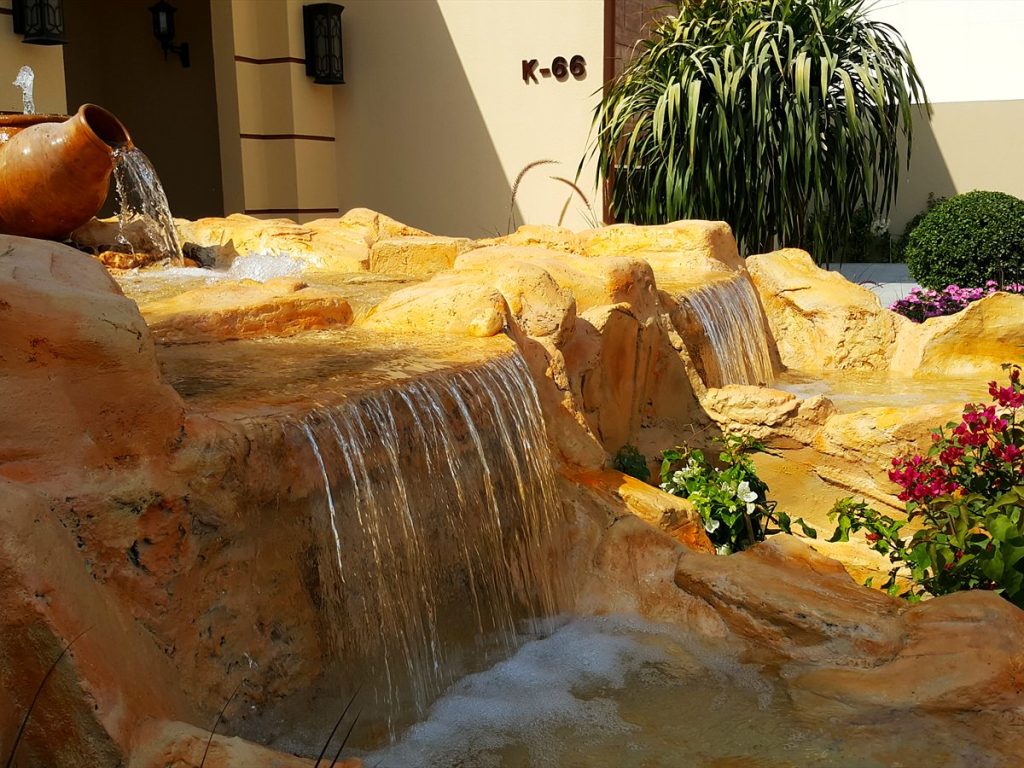
Sheet water walls, laminar flows and gentle cascades lose less than misting jets and tall fountains. Where spray is wanted, keep it inside the basin footprint and lower the height on windy days.
Shelter and shade
Walls, planting and shade structures reduce both wind and sun on the water surface. Position matters: a sheltered courtyard loses less than an exposed roof.
Right-sized basins
Basins should be wide enough to catch falling water in any wind, with a lip or return edge so splash runs back.
Indoor features
Indoors, evaporation is lower but adds humidity. Ventilation and the HVAC design should account for it, as explained in our indoor water wall guide.
Smart controls
- Timers. Run the feature when people are there to see it, and switch off overnight.
- Wind sensors. Reduce or stop jets automatically in strong wind.
- Automatic top-up with a meter. Keeps the level right and shows how much is added; a sudden rise points to a leak.
- Level alarms. Protect pumps from running dry and flag unusual losses early.
- Variable-speed pumps. Lower the flow when full effect is not needed, saving water and energy.
Maintenance saves water too
Leaks and blocked filters are the most common causes of waste. A regular check of seals, pipework and water levels catches problems early. Our guide to water feature maintenance sets out a practical routine.
A quick check you can do
- Mark the water level and note the time.
- Run the feature normally for 24 hours without topping up.
- Repeat with the pump off.
- If the loss with the pump off is similar to normal evaporation, but much higher with it on, look for splash or a leak in the pumped circuit. If both are high, look for a leak in the basin.
FAQ
Do water features waste a lot of water?
A recirculating feature mainly loses water through evaporation and splash. Good design, shelter and controls keep that to a minimum.
Which type of water feature uses the least water?
Smooth sheet flows and gentle cascades in sheltered positions usually lose less than tall jets and misting fountains.
Can a water feature be switched off in summer?
Yes, though basins should not be left half-full and stagnant. Draining, covering or running on a timer are better options.
How much does a custom water feature cost?
Custom water features start from AED 15,000; see our water feature cost guide.
For the service overview, see custom water features and commercial water features, or request a quotation.
Further reading: Evaporation (Wikipedia)