
 Custom Aquarium Cost in Dubai
 Saltwater vs Freshwater Aquarium
 Swimming Pool Glass Panels in Dubai
 Koi Pond Maintenance in Dubai
 Adidas Liquid Billboard Dubai
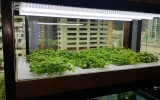
 Green Wall Installation in Dubai
In this article
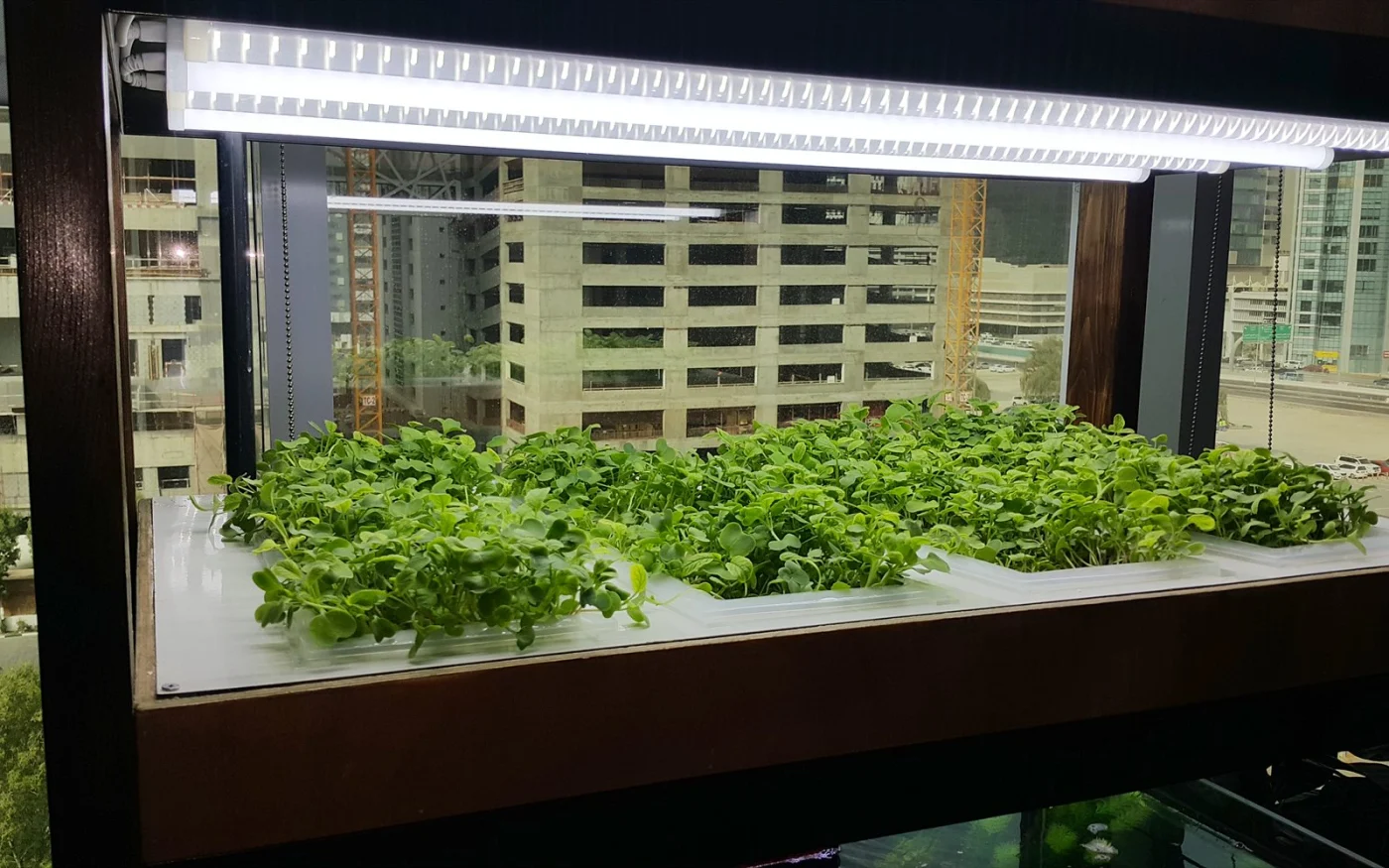
Aquaponics and hydroponics both grow plants without soil, and both suit desert climates where water is precious and outdoor growing is limited for much of the year. The difference is where plant nutrients come from: hydroponics feeds plants with a mineral nutrient solution, while aquaponics uses waste from fish. This guide compares how each works, how much water they use, and which suits homes, schools, hotels and businesses in the UAE.
How each system works
Hydroponics
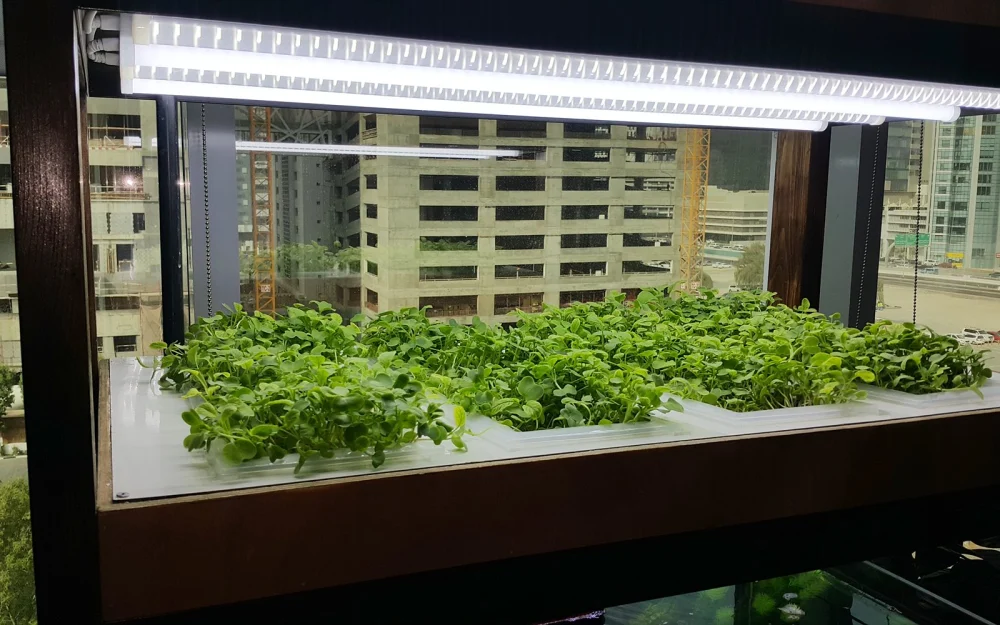
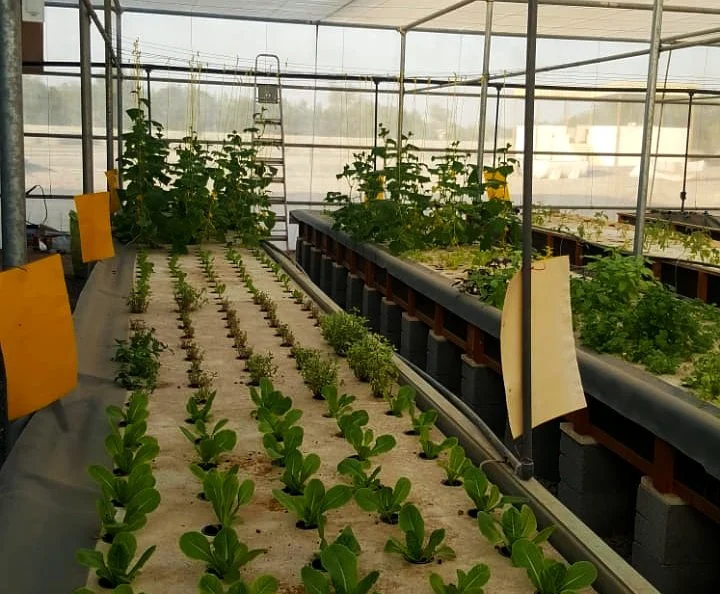
Plant roots sit in water, a growing medium or a thin film of nutrient solution. Nutrients are added as measured mineral salts, and pH and strength are monitored and adjusted. There are no fish, so the system is easier to control precisely and can be scaled quickly.
Aquaponics
Fish live in a tank. Their waste is converted by bacteria into nitrates that plants use, and the plants clean the water before it returns to the fish. The result is a small ecosystem that produces both plants and, in some systems, fish. Our aquaponics guide explains the loop in detail.
Side-by-side comparison
| Hydroponics | Aquaponics | |
|---|---|---|
| Nutrient source | Mineral nutrient solution | Fish waste converted by bacteria |
| Control | Precise, easy to adjust | Balanced over time; slower to change |
| Start-up | Fast | Needs weeks for bacteria to establish |
| Ongoing inputs | Nutrient salts, pH adjusters | Fish feed, occasional supplements |
| Living animals | None | Fish need daily care |
| Educational and display value | Good | Excellent, shows a full ecosystem |
| Best for | Maximum yield, commercial greens | Education, feature displays, integrated systems |
Water use
Both systems recirculate water, so they use far less than conventional soil growing, which loses water to drainage and evaporation. Recirculating systems are commonly cited as using up to around 90 percent less water than soil-based farming. In both, the main losses are evaporation and the water taken up by plants. In aquaponics, water is rarely discarded because nutrients build up slowly and are used by the plants. In hydroponics, the solution is sometimes refreshed, which adds a little extra use.
What desert conditions mean
- Heat. Warm water holds less oxygen, which affects both roots and fish. Indoor systems or controlled greenhouses, with cooling, are the norm in the UAE summer.
- Light. Indoors, LED grow lights replace sunlight and allow year-round growing.
- Water quality. Source water and evaporation affect mineral levels; testing is part of routine care.
- Food security. Both methods support the UAE’s interest in local, year-round food production with limited water.
Which should you choose?
- Choose hydroponics if the goal is efficient production of greens and herbs with tight control and no animals to care for.
- Choose aquaponics if you want a living system that shows how ecosystems work, a feature that combines fish and plants, or an educational project. See aquaponics for schools and CSR projects.
- Combine both in larger setups: an aquaponic display for visitors and hydroponic racks for volume.
FAQ
Which produces more: aquaponics or hydroponics?
Hydroponics is usually easier to optimise for yield. Aquaponics can be very productive once balanced, but it takes longer to establish.
Is aquaponic produce organic?
Aquaponics uses no synthetic fertiliser for plants, but organic certification depends on local rules and the whole production process.
Can I run either system indoors in Dubai?
Yes. Both work well indoors with LED grow lights and temperature control.
How much does an aquaponics system cost?
Our aquaponics systems start from AED 10,000, with the final price depending on size and features.
For the service overview, see aquaponics and hydroponics in the UAE, or request a quotation.
Further reading: Aquaponics (Wikipedia)
Running Costs and Effort: What to Expect Day to Day
Both systems need routine attention, but the work is different. Knowing the daily and weekly tasks helps you judge which one fits your team before you commit.
- Hydroponics: check pH and nutrient strength regularly, top up the reservoir, clean filters and pumps, and watch for root problems such as algae or slime. Most tasks are about measuring and adjusting.
- Aquaponics: feed the fish daily, check ammonia, nitrite, nitrate, pH and temperature, and remove solids. Most tasks are about keeping fish, bacteria and plants in balance.
Electricity is a main running cost for both in the UAE, because pumps, aeration, cooling and LED lighting run for many hours. Aquaponics adds fish feed and, if a pump fails or the power cuts out, a higher risk, since fish can be harmed quickly when water stops moving or oxygen falls. A backup air pump is a sensible precaution.
Which Crops and Fish Suit Each System
Leafy greens and herbs are the usual choice for both methods because they grow quickly, stay compact and need little support.
- Good starter crops: lettuce, basil, mint, parsley, kale and similar leafy plants.
- Fruiting crops: tomatoes, cucumbers, peppers and strawberries can be grown, but they need more nutrients, more light and more space. They are usually easier in a well-established hydroponic setup, or in a mature aquaponic system with enough fish.
- Fish for aquaponics: tilapia is widely used because it tolerates changing conditions and warm water. Ornamental fish such as koi or goldfish suit display systems where the fish are not meant to be eaten. Check local rules and species suitability before choosing.
Root vegetables and large crops are generally less practical in small indoor systems.
Common Mistakes When Starting Out
- Adding too many fish too early. Waste builds up faster than the bacteria can process it. Stock lightly and increase gradually.
- Ignoring water temperature. Warm summer conditions can stress fish and encourage algae and root disease. Plan cooling before you build.
- Skipping regular testing. Problems show up in water readings before plants or fish look unwell.
- Choosing a system that is too large. A smaller system you can maintain consistently usually performs better than a big one that is neglected.
- Overlooking maintenance cover. Holidays, school breaks and staff changes need a plan, especially where live fish are involved.
Starting small, learning the routine and expanding later is a practical path for homes, schools and businesses alike.