



 Custom Aquarium Cost in Dubai
 Saltwater vs Freshwater Aquarium
 Swimming Pool Glass Panels in Dubai
 Koi Pond Maintenance in Dubai
 Adidas Liquid Billboard Dubai
 Green Wall Installation in Dubai
In this article
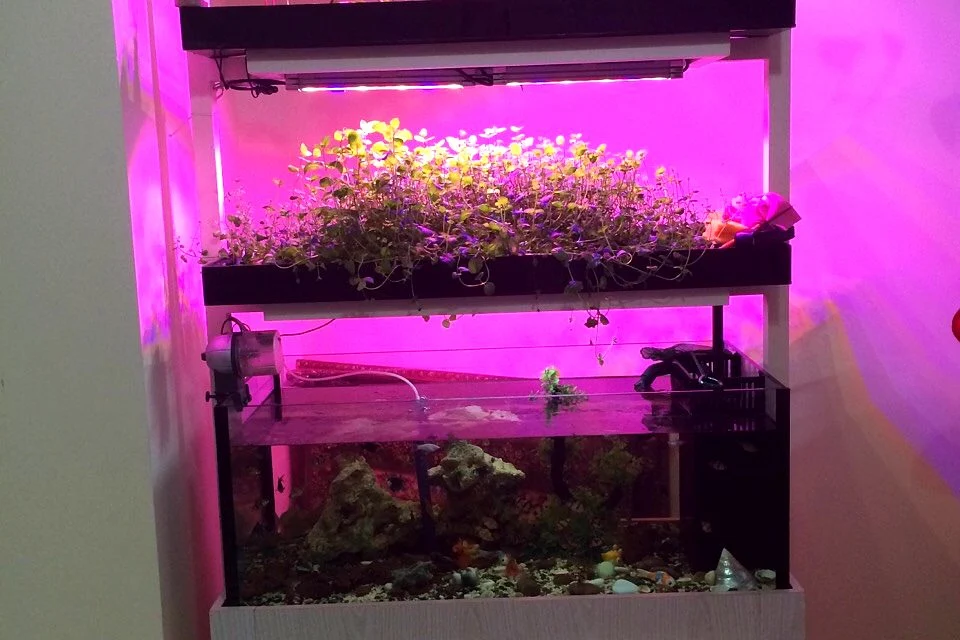
Aquaponics grows plants and keeps fish in one connected loop. Fish waste feeds the plants, and the plants take nutrients out of the water before it returns to the fish. It is a compact way of growing food or herbs, and it suits homes, hotels and offices that want a productive feature. Our systems start from AED 10,000.
How the loop works
- Fish in a tank produce waste that contains ammonia.
- Bacteria convert it into nitrates, which plants can use.
- Water is pumped to grow beds where plants absorb the nutrients.
- Clean water returns to the fish.
A balance between the number of fish, the amount of feed and the number of plants keeps the system stable.
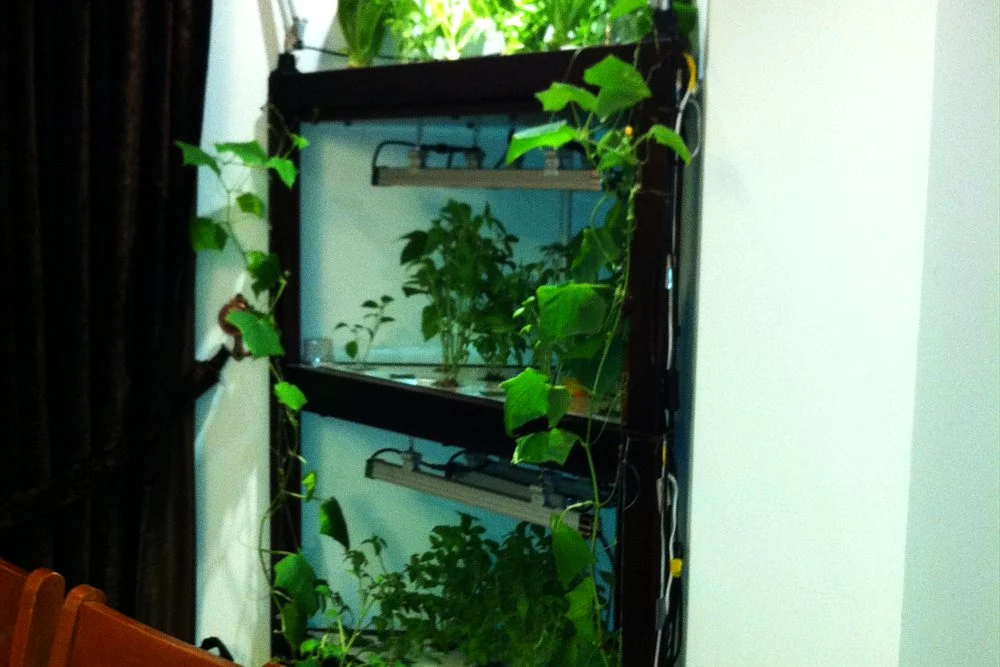
Aquaponics or hydroponics?
Hydroponics grows plants in nutrient solution that you supply, without fish. Aquaponics adds the fish and uses their waste as the nutrient source, which makes it more complex but also a living system. We design both, see aquaponics and hydroponics systems.
What grows well
Leafy greens and herbs suit most systems because they need modest nutrients. Larger fruiting plants need more mature, more heavily stocked systems.
Challenges in the UAE
- Heat. Water temperature has to stay in a range that suits the fish and the plants.
- Water quality. Local water can be hard and needs monitoring.
- Light. Indoors, plant lighting is part of the design.
What it costs
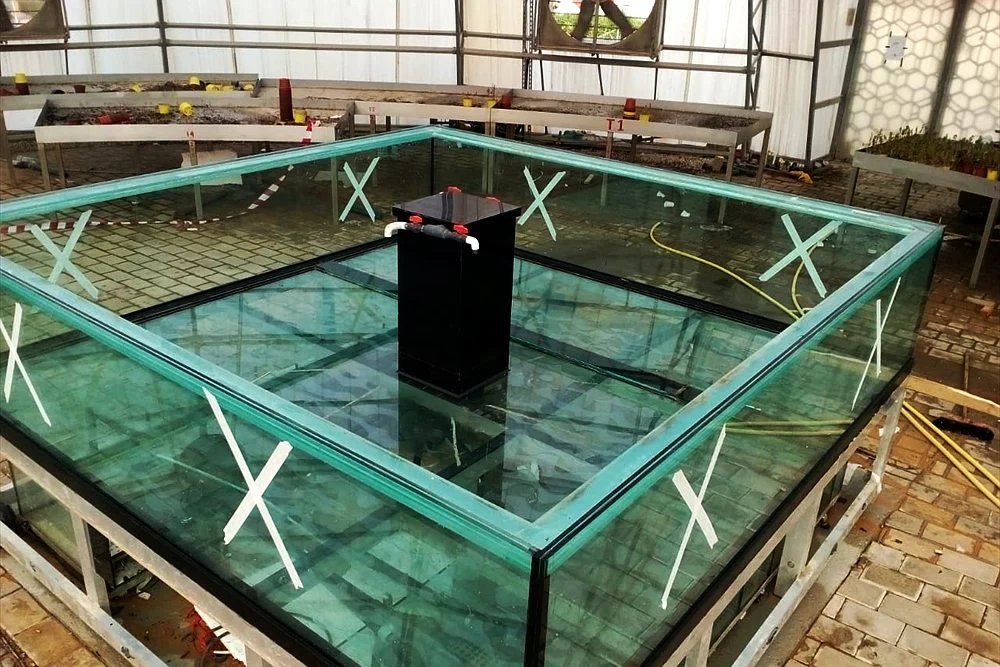
Price depends on the size, the layout, lighting, tank size and whether it is built into a room or freestanding. Systems from Water Wonders start from AED 10,000. Running costs are electricity, feed, water and a little attention.
FAQ
Is an aquaponics system hard to run?
It needs regular, light attention, and a stable system is more forgiving than a poorly designed one.
Can I install it indoors?
Yes, with suitable lighting and space for the tank and the grow beds.
Read about the aquaponics and hydroponics service or ask for a design.
Further reading: Aquaponics (Wikipedia) | Hydroponics (Wikipedia)
Not sure which growing method suits you? Our guide to aquaponics vs hydroponics in desert climates compares water use, control and start-up time.
Choosing Fish for an Aquaponics Tank
The fish tank is the engine of the system, so the species you choose shapes everything else. In a warm climate, hardy fish that tolerate higher temperatures and changing water conditions are the usual starting point.
- Tilapia: widely used in aquaponics because it is robust and copes well with warm water. It grows quickly and produces plenty of waste for the plants.
- Ornamental fish such as koi or goldfish: a good choice when the system is a display feature and the fish are not meant for eating.
- Other freshwater species: some can work, but check that their temperature and water-quality needs match the conditions you can maintain.
Avoid overstocking. More fish means more waste and feed, which puts pressure on the water quality. A modest, steady stocking level is easier to keep balanced, especially while the system is young. Check local rules on keeping and moving live fish before you buy.
Starting Up and Cycling a New System
A new aquaponics system cannot be fully stocked on day one. The bacteria that turn ammonia into nitrates need time to establish, a process called cycling.
- Fill and run the system. Circulate the water and check that the pumps, flow and aeration work as designed.
- Add an ammonia source. This can be a small number of fish or a measured ammonia product, so the bacteria have something to feed on.
- Test regularly. Track ammonia, nitrite, nitrate and pH. Ammonia and nitrite rise first, then fall as the bacteria colony grows, and nitrate begins to appear.
- Add plants and more fish gradually. Once nitrite stays near zero and nitrate is present, you can increase stocking in steps.
Cycling often takes several weeks. Rushing it is a common reason for fish stress and struggling plants.
Learning Aquaponics: Courses and Hands-On Experience
Many people who search for aquaponics classes are deciding whether the hobby suits them before they commit to a system. A few routes can help you learn.
- Workshops and short courses: these usually cover the nitrogen cycle, plumbing, plant choice and water testing. Ask what is covered and whether there is practical time with a working system.
- Visiting a working system: seeing a tank, grow bed and pump running shows you the space, noise and upkeep involved.
- Starting small: a compact tabletop or desktop unit lets you learn the routine of feeding, testing and harvesting before you invest in a larger installation.
Whatever route you take, learn to read your water tests. Understanding pH, ammonia, nitrite and nitrate is the single most useful skill for keeping a system healthy.
If you are considering a system for a classroom or a company community initiative, see our guide to Aquaponics for Schools & CSR Projects for ideas on learning and outreach.