



 Custom Aquarium Cost in Dubai
 Saltwater vs Freshwater Aquarium
 Swimming Pool Glass Panels in Dubai
 Koi Pond Maintenance in Dubai
 Adidas Liquid Billboard Dubai
 Green Wall Installation in Dubai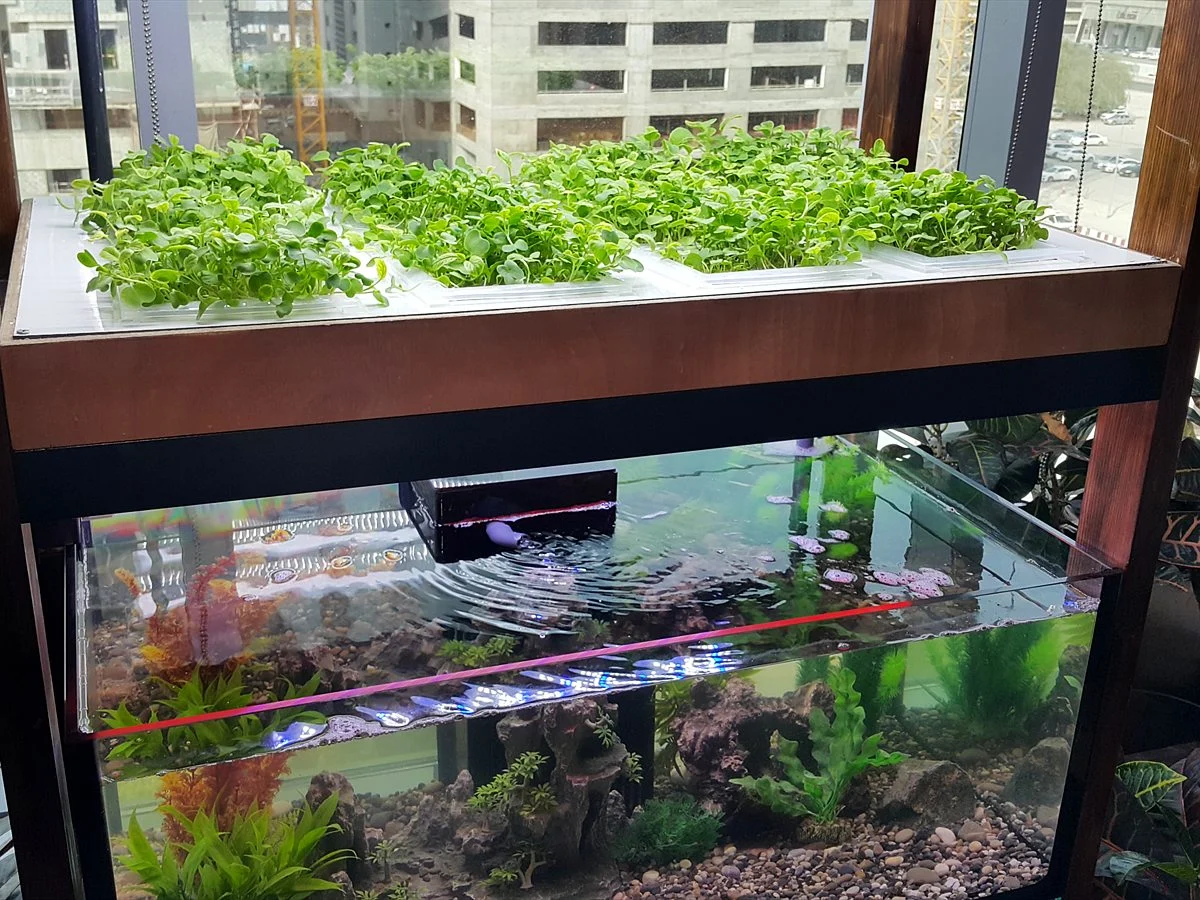
In this article
An aquaponics system is one of the most engaging ways to teach science and sustainability. Students see fish, bacteria and plants working together in a closed loop, measure real data and harvest food they have grown. For companies, the same system makes a visible, practical sustainability project for an office, a community space or a partner school. This guide explains the educational value, system options and how to plan a project that lasts beyond the launch day.
Why aquaponics works so well in education
- Biology. Fish health, plant growth, the nitrogen cycle and ecosystems in one system.
- Chemistry. Testing pH, ammonia, nitrite and nitrate and understanding what changes them.
- Maths and data. Recording measurements, growth rates and harvest weights, then graphing trends.
- Engineering and technology. Pumps, flow, timers, sensors and lighting.
- Sustainability. Water use, local food production and circular systems, which link directly to UAE priorities on food and water security.
- Responsibility. Students share daily tasks and see the result of consistent care.
System options
| System | Size | Best for |
|---|---|---|
| Classroom unit | Desk or cabinet | Primary classes and science labs |
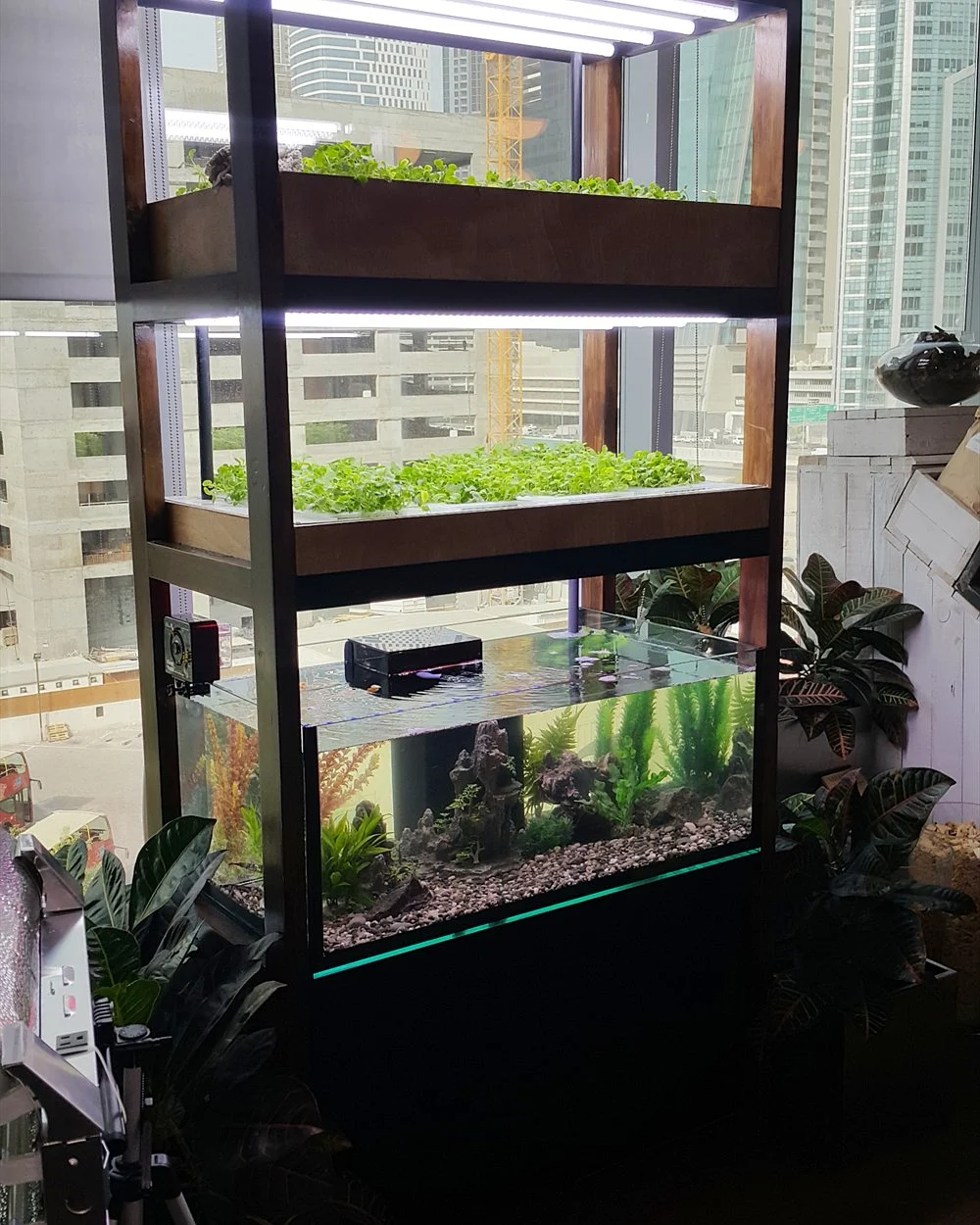
| Vertical tower | Floor-standing | Corridors, libraries, office lobbies |
| Media-bed system | Larger footprint | Secondary schools and growing clubs |
| Greenhouse system | Outdoor or rooftop structure | Whole-school or community projects |
Planning a school or CSR project
- Define the goal. Curriculum support, a sustainability showcase, food production, or all three.
- Choose the location. Indoors with LED lighting suits most UAE settings year-round. Outdoor systems need shade and cooling in summer.
- Check practical needs. Power, a water supply, drainage and a floor that can take the weight.
- Agree responsibilities. Who feeds the fish, tests the water and harvests? A simple rota keeps it going.
- Plan holidays. Summer breaks are the biggest risk. Automatic feeders, alarms and a maintenance visit schedule protect the system.
- Measure impact. Track harvests, water use and student participation for reports and sustainability communications.
Making it last
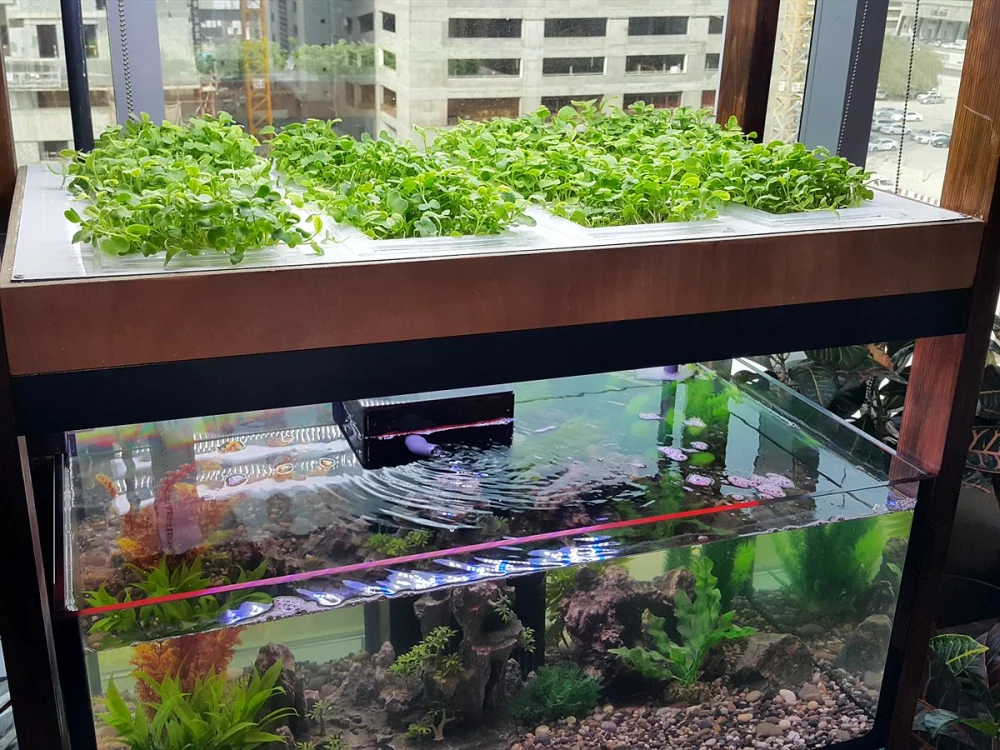
Many school and CSR projects start with enthusiasm and fade when the original champion moves on. The systems that last have three things: a clear owner, a simple routine, and professional support for the parts that need expertise, such as water chemistry, fish health and equipment checks. A maintenance plan from the start avoids the familiar story of an empty tank in the corner of a lab; see maintenance and care.
Ideas for activities
- Weekly water-testing log with graphs.
- Growth experiments comparing plant varieties or light levels.
- Harvest days linked to healthy-eating lessons.
- Student-led tours for parents or visitors.
- Comparing aquaponics with hydroponics; see our aquaponics vs hydroponics guide.
FAQ
What fish are used in school aquaponics systems?
Hardy, peaceful species that tolerate a range of conditions are usually chosen. The right species depends on the system size and temperature.
What happens to the system in summer holidays?
It needs a plan: automatic feeding, alarms and scheduled maintenance visits keep it healthy while the school is closed.
Can a company sponsor a system for a school?
Yes. Corporate sponsorship of a school system is a practical CSR project with visible, measurable results.
How much does an aquaponics system cost?
Our aquaponics systems start from AED 10,000, depending on size and features.
For the service overview, see aquaponics and hydroponics in the UAE and our aquaponics guide, or request a quotation.
Further reading: Nitrogen cycle (Wikipedia)