Across Dubai's villas, penthouses, and design-forward apartments, the custom aquarium has become one of the most sought-after features in luxury interiors. What was once considered a hobbyist's pursuit has evolved into a serious architectural statement, with homeowners, interior designers, and developers commissioning bespoke aquatic installations that rival any piece of fine art. Whether framed within a living room wall, positioned as a dramatic entrance feature, or built into a private office, a well-designed aquarium brings movement, colour, and a sense of calm that few other design elements can match.
Yet before any aquascaping begins or a single fish is selected, one decision shapes everything that follows: saltwater or freshwater. This choice influences the visual character of the aquarium, the livestock you can keep, the equipment required, the water chemistry that must be maintained, and the long-term commitment involved in caring for the system. It is rarely a simple either-or answer — the right direction depends on your home's architecture, your design vision, your lifestyle, and how hands-on you want to be with ongoing care.
In this guide, we walk through the saltwater vs freshwater aquarium decision in detail — covering appearance, livestock options, equipment, water chemistry, maintenance expectations, and how Dubai's climate and residential architecture factor into the planning process. Our goal is to help you approach your custom aquarium project with clarity, whether you're furnishing a single family home or specifying an aquatic centrepiece for a hospitality development.
At its core, the difference between a saltwater aquarium and a freshwater aquarium comes down to water composition — one replicates marine or ocean conditions, complete with dissolved salts and trace minerals, while the other uses fresh, unsalted water similar to rivers, lakes, and streams. This single distinction cascades into nearly every other aspect of the system.
A freshwater aquarium typically supports species such as tetras, cichlids, gouramis, and a wide range of aquatic plants, allowing for lush, garden-like aquascapes. A marine aquarium, by contrast, opens the door to vividly coloured reef fish, anemones, and — in more advanced setups — living coral, but requires closer attention to salinity, water movement, and biological stability.
Equipment requirements differ accordingly. Freshwater systems generally rely on a filter, heater, and appropriate lighting, while saltwater systems often incorporate protein skimmers, dedicated circulation pumps, and more precise water testing protocols. Maintenance expectations follow the same pattern: freshwater aquariums can often be managed with a straightforward routine, while marine and reef systems typically demand more frequent monitoring and a deeper understanding of water chemistry.
Neither type is inherently superior. The right choice depends on the aesthetic you're drawn to, the livestock that excites you, and how much ongoing involvement — or professional maintenance support — you want built into the experience.
A freshwater aquarium houses fish, invertebrates, and often live plants in water without added salt, closely mirroring the rivers, streams, and lakes these species originate from. It's the most common starting point for aquarium enthusiasts worldwide, and in Dubai, it remains a popular choice for homeowners who want a vibrant, living feature without the added complexity of marine chemistry.
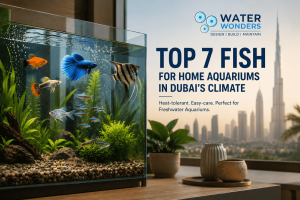
Choosing the right fish for home aquariums in Dubai also depends on temperature stability, tank size and maintenance requirements. Common freshwater fish include tetras, rasboras, angelfish, discus, gouramis, and various cichlid species, each offering distinct colour patterns, temperaments, and swimming behaviours that can be curated to suit the mood of a room. Many freshwater aquariums also incorporate live plants — from low-maintenance java fern to more demanding carpeting species — which contribute to water quality while creating a naturalistic, layered aquascape.
Filtration in a freshwater system is typically achieved through canister filters, sump systems, or hang-on-back units, depending on the aquarium's size and bioload. A heater is usually required to maintain stable tropical temperatures, and lighting is selected based on whether the aquarium includes live plants, which generally require higher-output fixtures than a fish-only display. Water parameters such as pH, hardness, and ammonia levels need periodic testing, and routine partial water changes remain a foundational part of upkeep — though exact frequency and volume should be assessed based on your specific tank size, livestock, and filtration setup.
A saltwater aquarium, also referred to as a marine aquarium, replicates ocean water conditions using a carefully balanced mix of salt and trace elements. This category spans from relatively straightforward fish-only systems to highly sophisticated reef aquariums that support living coral and delicate invertebrates.
Marine fish — such as clownfish, tangs, angelfish, and wrasses — are prized for their striking colouration and dynamic movement, often forming the visual centrepiece of a saltwater display. Many marine aquariums also incorporate invertebrates, including shrimp, snails, and hermit crabs, which contribute to the tank's ecological balance. Reef aquariums take this further by housing live coral, which requires precise lighting, water flow, and mineral supplementation to thrive.
Water chemistry in a saltwater system is more demanding than in freshwater. Salinity must be measured and maintained within an appropriate range, and parameters such as calcium, alkalinity, and magnesium become increasingly important as reef-keeping ambitions grow. Filtration typically involves a combination of mechanical, biological, and chemical media, frequently supported by a protein skimmer that removes organic waste before it breaks down and affects water quality. Lighting for reef systems is generally more advanced, providing the spectrum and intensity coral needs for photosynthesis, while circulation pumps replicate the water movement found in natural reef environments. Regular water testing is essential to catch imbalances early, particularly in systems supporting sensitive coral or invertebrate life.
Within saltwater aquariums, there's an important distinction between fish-only systems and reef aquariums. A fish-only saltwater aquarium focuses on marine fish and hardy invertebrates, without the added complexity of keeping live coral. These systems still require attention to salinity and filtration but generally offer more flexibility in water parameters than a reef tank.
Reef aquariums, by contrast, are built around the needs of living coral, which are considerably more sensitive to fluctuations in lighting, water flow, and chemical stability. Because coral relies on specific spectrums of light and consistent mineral levels to grow, reef systems typically call for more specialised equipment, closer monitoring, and a more disciplined maintenance routine. This doesn't mean a reef aquarium is out of reach for a Dubai home — many are successfully maintained with the right professional design and ongoing support — but it does represent a step up in commitment compared to a fish-only marine setup.
The table below summarises the core differences between saltwater and freshwater aquariums. As with any aquarium project, exact requirements should always be assessed based on the specific size, livestock, and design of your system.
| Factor | Freshwater Aquarium | Saltwater Aquarium |
|---|---|---|
| Initial setup complexity | Generally more straightforward | Typically more involved, especially for reef systems |
| Equipment requirements | Filter, heater, lighting; CO2 optional for planted tanks | Protein skimmer, return and circulation pumps, marine lighting, salt mixing equipment |
| Maintenance | Routine water changes and filter care | More frequent testing and monitoring, particularly for reef systems |
| Water chemistry | pH, hardness, ammonia monitoring | Salinity, calcium, alkalinity, magnesium monitoring |
| Livestock options | Tetras, cichlids, gouramis, livebearers, plants | Marine fish, invertebrates, optional coral |
| Aquascaping | Live plants, driftwood, stone | Live rock, coral structures (reef systems) |
| Lighting | Standard to plant-specific fixtures | Marine-spectrum lighting; advanced for reef systems |
| Filtration | Canister, sump, or hang-on-back systems | Multi-stage filtration with protein skimming |
| Typical maintenance skill level | Accessible to a wide range of experience levels | Benefits from more advanced knowledge or professional support |
| Long-term operating considerations | Generally simpler system stability | Requires ongoing attention to biological and chemical balance |
| Visual style | Natural, lush, garden-like | Vivid, dynamic, reef-inspired |
| Suitability | Families, first-time owners, planted-display enthusiasts | Design-driven clients seeking a dramatic marine centrepiece |
This is less a question of which type looks "better" and more a question of which complements your architecture and design intent. Freshwater planted aquariums bring a soft, organic quality to a space — layers of green, gentle movement, and a sense of natural calm that suits contemporary interiors, formal living rooms, and spaces designed around warmth and texture. They integrate beautifully into minimalist Dubai apartments and villas where the goal is a serene, nature-connected atmosphere.
Saltwater and reef aquariums, on the other hand, tend to make a bolder visual statement. The vivid colouration of marine fish, combined with the structural drama of live rock or coral formations, creates a dynamic focal point well suited to entrance lobbies, formal dining areas, private offices, and hospitality interiors where impact is part of the design brief. Under the right lighting, a reef aquarium can feel almost sculptural — a piece of moving art rather than a static feature.
Architectural integration matters just as much as the aquarium itself. Built-in wall aquariums, room dividers, and bespoke niches allow either style to become a seamless part of the home's structure rather than an added furniture piece. Ultimately, the best choice depends on the property's architecture, the client's design vision, and how the aquarium is intended to function within the broader interior — as a quiet ambient feature or a dramatic centrepiece.
Saltwater aquariums offer a level of visual diversity that's difficult to replicate with freshwater species alone. Marine fish span an extraordinary range of colours and patterns, from the bold orange of a clownfish to the electric blues of a tang, while reef systems introduce the added dimension of coral structures — branching, encrusting, and flowing forms that create genuine architectural interest within the tank itself.
For clients seeking a strong visual impact, a well-designed marine or reef aquarium can become the single most talked-about feature in a home. The combination of dramatic lighting, dynamic livestock, and intricate aquascaping lends itself naturally to bespoke architectural integration — built into a feature wall, positioned as a room divider, or showcased as a freestanding sculptural piece.
It's important to be realistic about what this level of visual sophistication requires. Advanced marine systems, particularly reef aquariums, typically call for more equipment, closer monitoring, and specialist maintenance than a comparable freshwater display. This isn't a drawback so much as a trade-off — for many Dubai homeowners, that additional investment in equipment and care is precisely what delivers the luxury result they're after, especially when supported by professional maintenance services.
Freshwater aquariums offer their own distinct set of strengths, starting with the sheer breadth of fish species available — from small schooling tetras to statement cichlids and elegant angelfish — giving designers considerable flexibility in curating a display that matches the home's colour palette and mood.
The addition of live aquatic plants opens up a different kind of design possibility altogether. Freshwater aquascaping can range from dense, jungle-like layouts to precise, minimalist compositions inspired by natural landscapes, offering a softer, more organic aesthetic than a marine system typically provides. This flexibility makes freshwater aquariums exceptionally well suited to residential interiors, where the goal is often a calming, nature-inspired feature rather than a high-drama centrepiece.
Depending on the specific setup, freshwater systems can also involve fewer specialised components than a marine system, and they're generally more accessible to homeowners across a range of experience levels — from those completely new to aquarium keeping to seasoned hobbyists. That said, it would be inaccurate to suggest every freshwater aquarium is inexpensive or maintenance-free; larger, densely planted, or heavily stocked freshwater systems can involve significant equipment investment and ongoing care, just as a marine system would. The right assessment always depends on the specific design and scale of the project.
In general terms, yes — saltwater aquariums, particularly reef systems, tend to involve a more demanding maintenance routine than freshwater aquariums. But "harder" doesn't mean unmanageable, and the gap narrows considerably with professional design and ongoing servicing.
Water changes are a routine part of both system types, but saltwater changes involve the additional step of mixing salt to the correct specific gravity before use. Water testing tends to be more frequent and more detailed in marine systems, covering parameters like salinity, calcium, alkalinity, and magnesium — particularly important where coral is present — compared to the more limited testing typically needed in a freshwater setup.
Filtration and equipment monitoring also demand closer attention in saltwater systems. Protein skimmers need regular cleaning, circulation pumps should be checked for performance, and salinity levels can shift with evaporation, especially in Dubai's climate. Algae management is a consideration in both system types but can require more targeted intervention in reef aquariums, where excess nutrients can quickly affect coral health. Livestock health monitoring is generally more nuanced in marine systems too, as many marine species and coral are more sensitive to water quality fluctuations than typical freshwater fish.
That said, maintenance demands depend heavily on variables specific to your system — aquarium size, livestock selection, filtration design, the level of automation installed, and whether you have access to professional servicing. A well-designed, properly automated saltwater aquarium with a professional maintenance plan in place can be a very manageable long-term feature, even for homeowners with limited hands-on time.
Equipment needs diverge significantly between the two aquarium types, and understanding these differences helps set realistic expectations for your project.
The right equipment selection always depends on the aquarium's volume, intended livestock, aquascaping design, and the overall ecosystem you're aiming to create. This is precisely why a professional assessment — rather than a generic equipment list — is essential before committing to a build.
Dubai's climate introduces a distinct set of considerations that don't apply in more temperate regions, and factoring them into your planning from the outset helps ensure long-term system stability.
High ambient temperatures, combined with year-round reliance on air conditioning, create a fluctuating indoor environment that can influence both water temperature and evaporation rates. In saltwater systems, evaporation directly affects salinity, meaning consistent top-off and monitoring become especially important. Rapid indoor-outdoor temperature shifts, common in Dubai homes moving between air-conditioned interiors and outdoor heat, can also place additional demand on heating and cooling equipment to maintain water temperature stability.
Placement decisions matter significantly in this context. Aquariums should generally be positioned away from direct sunlight, which can accelerate algae growth and cause temperature spikes, and away from air conditioning vents that might cause localised temperature fluctuations near the glass. Equipment ventilation is another consideration — pumps, skimmers, and lighting generate heat, and adequate airflow around cabinetry helps maintain equipment longevity and system stability.
Electrical planning deserves early attention too, particularly for larger or more automated systems that may require dedicated circuits, surge protection, or backup power considerations. Maintenance access should also be built into the design from the start — whether that means rear cabinet access, a service corridor behind a built-in wall aquarium, or simply enough clearance for routine equipment checks. None of this makes Dubai's climate an obstacle to either aquarium type; it simply means the planning process should account for local conditions from day one, which is where working with an experienced local specialist becomes valuable.
Aquariums can be successfully integrated into a wide range of spaces, each offering a different design opportunity and set of planning considerations.
Each of these locations comes with its own structural, electrical, plumbing, and ventilation requirements. Structural load-bearing capacity needs verification, especially for larger tanks or upper-floor installations; plumbing may be required for automated water changes or drainage; and ventilation and access points must be planned around the specific equipment the system will use. These factors are best assessed through a proper site evaluation rather than assumed at the design stage.
Beyond the saltwater vs freshwater decision, homeowners also choose between different structural approaches to how the aquarium is presented within the home.
A built-in aquarium is integrated directly into a wall or architectural structure, often with equipment concealed behind the wall for a seamless finish. This approach delivers a highly polished, gallery-like presentation but requires early coordination with architects and contractors, since it affects structural planning, plumbing routes, and electrical layout from the design stage onward.
A wall-mounted architectural aquarium offers a similar visual effect with slightly more flexibility, often used in renovation projects where full structural integration isn't feasible. A room-divider aquarium serves a dual purpose — separating two spaces while allowing light and movement to pass between them, making it a popular choice for open-plan living and dining areas. A freestanding aquarium, meanwhile, offers the most flexibility in terms of placement and future relocation, presented within bespoke cabinetry that complements the surrounding interior design.
Each approach carries different planning implications, from lead time and structural coordination to long-term maintenance access. The right choice depends on whether the project is new-build or renovation, the home's existing architecture, and how central the aquarium is meant to be within the overall design.
Aquarium investment in Dubai varies considerably based on the scope and ambition of the project, and it would be misleading to quote fixed prices without understanding your specific requirements. Instead, it's more useful to understand the factors that influence overall cost.
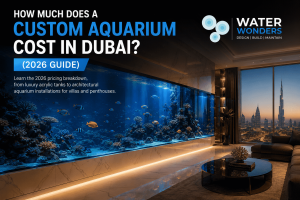
Generally speaking, saltwater and particularly reef systems tend to involve a higher initial and ongoing investment than comparable freshwater setups, due to the additional equipment and monitoring involved. However, the true cost of any project — whether saltwater or freshwater — depends entirely on its scale and specification. If you're planning a larger installation, our guide to custom aquarium cost in Dubai explains how size, system type, cabinetry, equipment and architectural integration affect the overall investment.
| Maintenance Task | Freshwater Aquarium | Saltwater Aquarium |
|---|---|---|
| Routine maintenance | Straightforward weekly or biweekly routine | More involved, particularly for reef systems |
| Water testing | Basic parameters (pH, ammonia, nitrite, nitrate) | Expanded parameters (salinity, calcium, alkalinity, magnesium) |
| Water changes | Standard dechlorinated water | Requires salt mixing to correct specific gravity |
| Equipment cleaning | Filter media rinsing, heater checks | Skimmer cleaning, pump maintenance, salt creep management |
| Algae management | Generally manageable with routine care | Requires closer nutrient control, especially in reef tanks |
| Livestock care | Generally more tolerant of minor fluctuations | Often more sensitive, particularly coral and invertebrates |
| Technical complexity | Lower to moderate | Moderate to high, depending on system design |
| Professional servicing | Optional but helpful for larger systems | Strongly recommended, especially for reef aquariums |
For those new to aquarium keeping, freshwater systems are often considered a more accessible starting point. The water chemistry is generally more forgiving, the equipment list is shorter, and the learning curve tends to be gentler — making freshwater a common recommendation for first-time owners who want to build confidence before taking on a more complex system.
That said, it would be an oversimplification to suggest saltwater aquariums are unsuitable for beginners altogether. With professional design, proper automation, and an ongoing maintenance plan in place, even first-time owners can successfully enjoy a saltwater or reef aquarium in their home. The key difference isn't necessarily the owner's prior experience — it's whether the system has been properly planned, equipped, and supported from the outset. For homeowners drawn to marine life but concerned about the learning curve, professional maintenance packages can bridge that gap effectively.
When an aquarium is intended as an architectural statement rather than a personal hobby project, the decision-making process shifts. Scale becomes a bigger factor — larger aquariums generally allow for more dramatic aquascaping and livestock variety, whether freshwater or saltwater. Visibility matters too: an aquarium positioned as a room divider or entrance feature is seen from multiple angles and needs to look considered from every perspective.
Livestock choice often follows the design brief rather than personal hobbyist preference — a client seeking maximum visual drama might lean toward a reef aquarium's colour and movement, while a client seeking a calming, natural atmosphere might prefer a lush freshwater planted display. Maintenance expectations and automation level should be discussed early, particularly for clients who travel frequently or prefer minimal hands-on involvement, in which case a fully automated system paired with professional servicing becomes essential regardless of aquarium type.
Ultimately, architectural integration and lifestyle considerations tend to matter more in a luxury villa context than the saltwater-versus-freshwater question alone. The right answer emerges from a conversation about how the client lives, how the space will be used, and what level of ongoing involvement suits their routine.
To help simplify the decision, consider which of the following scenarios best reflects your priorities:
These scenarios offer a starting point, but every home and client is different. A professional consultation remains the most reliable way to translate your priorities into a well-planned, technically sound aquarium project.
A well-executed custom aquarium moves through a structured process, from initial concept to long-term care:
For larger or architecturally integrated projects, coordination between aquarium specialists, architects, interior designers, contractors, and MEP teams is essential to ensure the system is properly supported from a structural, electrical, and plumbing standpoint. This collaborative approach helps avoid costly changes later in the build process.
A custom aquarium — whether saltwater or freshwater — is a technical system as much as it is a design feature, and getting it right involves far more than selecting an attractive tank. Professional design brings together structural engineering, equipment selection, plumbing and electrical coordination, aquascaping, livestock planning, and automation into a single cohesive project, reducing the risk of costly oversights.
This is particularly relevant in Dubai's residential and hospitality projects, where aquariums are often integrated directly into architecture rather than added as standalone furniture. A professional approach ensures the system is sized correctly for its location, equipped appropriately for its livestock, and supported by a maintenance plan that keeps it thriving long after installation.
Water Wonders works as a luxury aquarium and water feature specialist based in Dubai, supporting homeowners, interior designers, architects, and hospitality projects through the full journey — from initial concept and engineering coordination through to aquascaping, livestock planning, and ongoing maintenance. Whether the project calls for a lush freshwater planted display or an ambitious reef installation, the emphasis remains on long-term system reliability alongside striking design.
Explore more about Custom Aquariums, our approach to Aquarium Design, and our Aquarium Installation and Aquarium Maintenance services.
There is no universally "better" option in the saltwater vs freshwater aquarium decision — only the option that best matches your design vision, lifestyle, and appetite for ongoing involvement.
Choose freshwater when:
Choose saltwater when:
For a luxury Dubai residence, the right choice ultimately comes down to your lifestyle, design goals, available space, maintenance expectations, livestock preferences, and the technical planning behind the project. A thoughtful, professionally guided approach ensures that whichever direction you choose, the result is an aquarium that thrives — both as a living ecosystem and as a defining feature of your home.
Generally, yes — saltwater aquariums, particularly reef systems, tend to require more frequent testing, closer monitoring of parameters like salinity and calcium, and more involved equipment maintenance than freshwater aquariums. However, the gap narrows considerably with a well-designed, properly automated system supported by professional servicing.
Neither is universally better. Freshwater aquariums often suit homeowners seeking a natural, planted aesthetic with a simpler maintenance routine, while saltwater aquariums appeal to those drawn to marine life and a more dramatic visual centrepiece. The right choice depends on your design goals, lifestyle, and maintenance preferences.
Saltwater systems, especially reef aquariums, generally involve higher initial and ongoing costs due to additional equipment like protein skimmers and specialised lighting. That said, actual costs for either type vary significantly based on aquarium size, design complexity, and livestock — a custom assessment is the only reliable way to determine project costs.
Yes, reef aquariums can be successfully installed and maintained in Dubai villas with proper professional design, equipment selection, and ongoing maintenance support. Reef systems do require more specialised care than fish-only saltwater or freshwater aquariums, so professional planning is particularly valuable.
Maintenance frequency depends on the system's size, livestock, and level of automation, but saltwater aquariums generally require more frequent water testing and equipment checks than freshwater systems. A professional maintenance plan can help establish the right schedule for your specific setup.
Freshwater aquariums typically follow a more straightforward routine, including regular partial water changes and periodic filter maintenance. Exact frequency depends on tank size, stocking levels, and filtration capacity, and should be assessed for your specific system.
Dubai's high ambient temperatures and reliance on air conditioning can influence evaporation rates and indoor temperature stability, which in turn affects salinity in saltwater systems and overall water temperature. Thoughtful placement, equipment selection, and monitoring help manage these factors effectively.
Yes, both freshwater and saltwater aquariums can be integrated into a wall as a built-in architectural feature. This approach requires early coordination with architects and contractors to plan for structural support, plumbing, electrical access, and equipment concealment.
Yes, existing homes can be retrofitted with a custom aquarium, though the approach may differ from new-build projects. A site assessment helps determine the best structural and technical solution for integrating an aquarium into an existing space.
Freshwater aquariums are often considered more accessible for those new to aquarium keeping, thanks to more forgiving water chemistry and simpler equipment needs. That said, saltwater aquariums can also be successfully enjoyed by beginners when professionally designed and supported by ongoing maintenance.
Installation timelines vary significantly based on the aquarium's size, complexity, and level of architectural integration. Projects involving structural work or built-in walls generally take longer than freestanding installations. A project-specific timeline is best determined during the design and planning phase.
Yes, Water Wonders provides custom aquarium design, engineering coordination, installation, aquascaping, and ongoing maintenance services for homeowners, designers, architects, and hospitality projects across Dubai, covering both freshwater and saltwater systems.
Whether you're drawn to the tranquil beauty of a freshwater planted display or the vivid drama of a saltwater reef system, choosing the right aquarium for your Dubai home deserves careful, professional consideration. From initial concept through to engineering, installation, aquascaping, and long-term maintenance, Water Wonders supports villas, residences, and hospitality projects across Dubai with bespoke aquatic solutions tailored to each client's architecture and lifestyle.
If you're ready to explore what a custom aquarium could bring to your home, we invite you to start a conversation with our team. Browse our Portfolio, learn more about our Luxury Water Features and Swimming Pools services.
Contact Us for a Consultation